
The Hydrogen Stream: Hydrogen-powered trains for the German network
Elsewhere, the Danish government announced a plan to deploy up to 6 GW of electrolyzer capacity by 2030 and Germany and Norway agreed to conduct a feasibility study on large-scale hydrogen transport, including via pipeline.
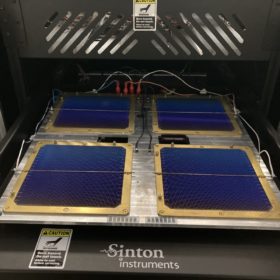
The Solar Tech Check: Toward 50-year modules, and how the numbers add up for HJT
This week sees new technoeconomic analysis published on different aspects/materials for heterojunction: Important to consider as Europe in particular looks to be betting big on this technology for its manufacturing comeback. And a new report from NREL in the United States examines progress in degradation and durability to increase module lifetimes.
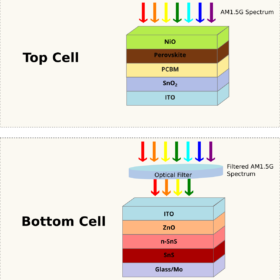
Double-junction perovskite-tin sulfide PV cell design with up to 28.92% efficiency
An Iranian-Italian research group has simulated a double-junction tandem solar cell based on perovskite and tin sulfide. They said that it can reach an efficiency rating of between 22.9% and 28.92%.

Investment cycle means race is on to incentivize green hydrogen
A report published by Irena hints the world’s politicians will have to get to work immediately to avoid another generation of fossil fuel-fired hydrogen, ammonia, and methanol plants being set up to run into the second half of the century.
Utility-scale TOPCon – Financial & field performance analysis
A wave of announcements in 2021 saw PV cell and module manufacturers begin what is already shaping up to be a major shift toward n-type technologies, TOPCon cells emerging as an early leader. The products based on these have made big promises in terms of lower project costs, higher energy yield and longer lifetimes. As TOPCon modules become more widely available to buyers in the large-scale segment, it’s important to see how these claims play out in the field. In this pv magazine Webinar, we take a closer look at the features of JinkoSolar’s Tiger NEO modules, and how these are performing, with LCOE and return on investment data from Clenergize, and analysis from TÜV Rheinland of projects already up and running in Australia.
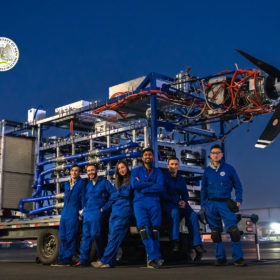
The Hydrogen Stream: Universal Hydrogen builds manufacturing facility in the United States
Elsewhere, Scatec and partners have signed a memorandum of understanding to develop a large scale green ammonia facility in Egypt. Hydrogen developments were also announced in India and the United Kingdom.

World has installed 1TW of solar capacity
The world has installed its first terawatt of hardware on Earth to generate electricity directly from the sun.

Paving the way for green hydrogen certification
The International Renewable Energy Agency has outlined a series of technical considerations for green hydrogen tracking systems. According to the document, a degree of flexibility should be taken into account in the short term to ensure that the nascent green hydrogen market can develop.
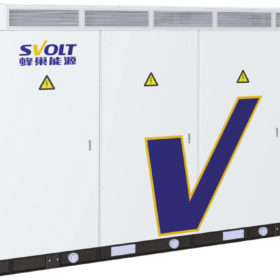
Svolt unveils new storage solutions for residential, commercial PV systems
The Chinese manufacturer has presented new products based on its lithium-iron phosphate battery technology. Their capacity ranges from 10.6 to 639.6kWh.
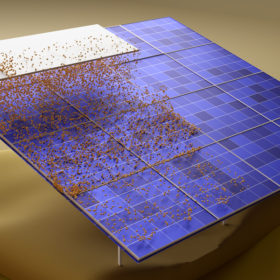
MIT scientists develop PV cleaning system based on electrostatic repulsion
Scientists from the Massachusetts Institute of Technology have developed a system that can be operated at a voltage of around 12V, with a 95% recovery rate for lost power after cleaning. The waterless system can be operated automatically via an electric motor.
