Weekly Round-Up: Gigafactory in Spain, financial close in Armenia, PPA in Sweden
Solar and storage are developing at a relentless pace and pv magazine cannot cover all the interesting developments that are announced day by day. In this weekly Round-Up, we provide a quick review of all facts and deals that should not be off of our readers’ radar.
The Hydrogen Stream: Siemens targets $1.50/kg by 2025, BP and Saudi Aramco bet on blue hydrogen
The German company expects to roll out its in-house proton exchange membrane (PEM) electrolysis technology to implement a gigawatt production of electrolyzers. BP partners with UK gas distributor Northern Gas Networks (NGN) to develop blue hydrogen and Saudi Aramco teams up with Hyundai Heavy Industries to do the same. Italy’s Snam wants to build hydrogen projects in the United Arab Emirates.

DuPont Teijin: Solar is at a crossroads, the PV value chain must come together
Rivalry is an integral part of the global business landscape, particularly in an industry like solar where products have become commodities. However, as Steven Davies, EMEA market manager for DuPont Teijin Films underlines, when it comes to sustainability, cross-industry partnerships are increasingly necessary to overcome the challenges companies are facing, including changing consumer demands and supply chain risks posed from climate change disruptions.
Spanish solar renaissance lifts world to record year for large scale projects
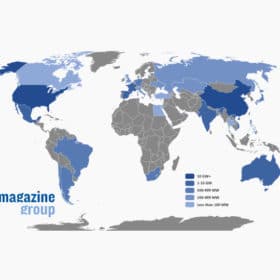
A global ranking of large scale solar project capacities indicates prominent roles for a resurgent Spain, behind the usual top three of China, the U.S. and India, with Australia and the Netherlands also on the rise. There were disappointing returns, though, for the U.K., Italy and Canada.

The weekend read: Bifacial drives PV encapsulant switch
Suppliers of encapsulant materials – plastic sheets that are heated to laminate together the components in PV module stacks – are rapidly expanding to keep pace with module manufacturing in Asia and other parts of the world. Ethylene-vinyl acetate (EVA) continues to dominate the market, but new developments in module technology are driving a slow shift to more costly polyolefins.
Hydrogen shipping vs submarine cables
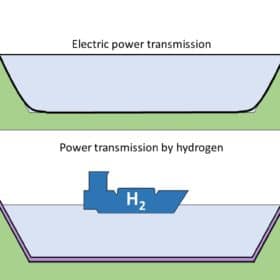
Hydrogen transportation and submarine power lines have been compared by an international research team to find out which may be the cheapest option to connect for energy exchange regions separated by the sea. According to their findings, the hydrogen shipping alternative does not present very good prospects of applicability in the future, unless some disruptive technological breakthroughs are made. What makes compressed and liquified hydrogen ships still attractive, however, is that they can export energy almost anywhere, and that electrolysis and liquefaction plants are relatively easy to expand compared to marine cables.
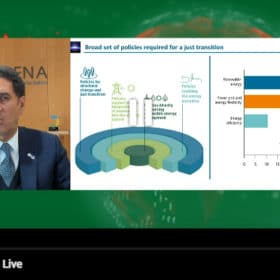
Global temperature goal of 1.5C needs 14 TW of solar by mid century
Renewable electricity will be linked to 90% of the actions needed to remove carbon emissions in 2050, according to the International Renewable Energy Agency, and the biggest volume of generation capacity will be provided by solar.
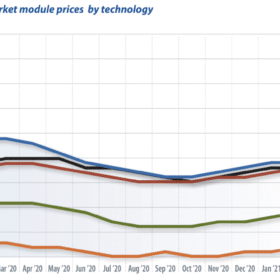
Why human rights protection is pushing up PV module prices
The solar industry typically sees itself as being supportive of the environment, humanity, and human rights. Even large Chinese PV manufacturers publish statements to this effect, particularly if they are listed on Western stock exchanges. But what do human rights have to do with the solar industry? What connections exist, asks Martin Schachinger of pvXchange, and how are they important to the future success of the European PV market?
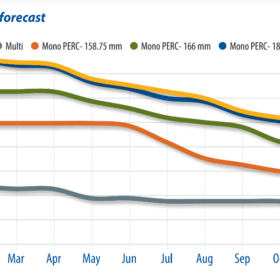
Manufacturing amid market concentration
The solar market is expected to grow in 2021, following a year of pandemic-driven supply chain disruptions, exacerbated by explosions at polysilicon plants. PV InfoLink estimates almost 154 GW of module demand in 2021, up by 10% on 2020. Analyst Amy Fang examines the key market trends for the first quarter.
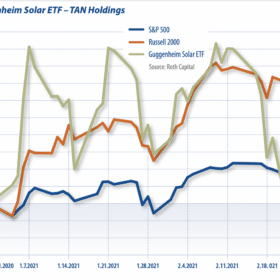
Guggenheim Solar Index: Headwinds, or a healthy correction?
In the month of February, the solar industry witnessed a decline, writes Jesse Pichel of ROTH Capital Partners. Increasing prices throughout the supply chain and forced labor concerns from China spelled headwinds for the solar industry, but the decline can also be viewed as a healthy correction, following historic highs in January.
