
Energy without borders
Germany has long been a global leader in driving acceptance of clean technologies through its progressive energy policies and regulations. Its influence in addressing climate change extends well beyond its borders, and the country is taking an active role to support the global energy transition through international cooperation. Germany has bilateral energy partnerships with approximately 20 countries, and its strong partnership with California is focused on creating a route to the future – a carbon-neutral one. State Secretary at the Federal Ministry for Economic Affairs and Energy Andreas Feicht met with pv magazine to discuss the country’s partnership with California, and its journey toward decarbonization.
‘They created a rechargeable world’
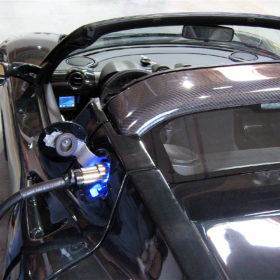
American John B. Goodenough, Brit Stanley Whittingham and Akira Yoshino, from Japan, will receive the Nobel Prize for Chemistry for developing the lithium-ion battery. A statement from the Royal Academy of Sciences of Sweden said the invention “laid the foundations of a society without wires and fossil fuels, and [they] are of great benefit to humanity”.
Do lead batteries have a role in the clean energy transition?
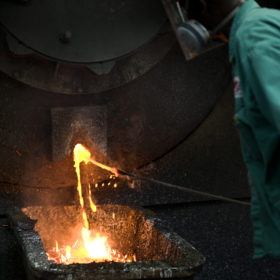
The Consortium for Battery Innovation has outlined research goals for advanced lead-based battery concepts, claiming the potential of the technology is “nowhere near fully exploited”. The group, comprised of lead-battery industry stakeholders, says such devices can play an important role alongside lithium-ion and other storage technologies in electric vehicles, renewable energy storage and other applications.

Emerging markets help new faces into list of world’s top EPC providers
Although the Wiki-solar website ranking only gives a snapshot of PV project engineering, procurement and construction contracts outside China, it is nevertheless a useful indicator of the changing shape of the global solar market.

It’s official: The bifacial tariff exemption is over
The office of the U.S. Trade Representative has removed the exemption of bifacial products from Section 201 tariffs, effective October 28.

Stock markets pumped $1.3bn into solar in the last quarter
Fundraising activity for solar leaped in the July-to-September period to provide healthy quarterly and year-so-far comparisons on 2018.
Bill for replacement inverters and other solar maintenance could hit $9.4bn by 2024
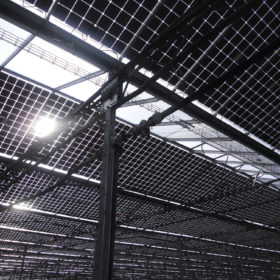
This year will see strong growth for the global PV market, to 114 GW, and that pattern will continue in the years ahead, according to analyst Wood Mackenzie. a report has highlighted soaring inverter replacement costs for PV project owners as a side-effect of the solar success story.
The weekend read: Size matters
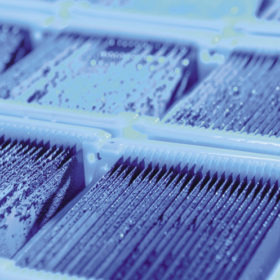
The latest development on the module front sees manufacturers adopting larger wafer sizes in order to reach the industry’s raised expectations for power output. Older “M2” wafers have been the standard in recent years but now appear to be on the way out. Several theories about optimal size are gaining ground, but the future direction of the standard is still far from clear.

GCL wants a 1 GW perovskite cell production line in place by 2022
With the Chinese manufacturer claiming it has already hit 16% conversion efficiency on a large panel, a recent perovskite conference heard predictions the technology will make up the next generation of PV cells – provided it avoids the pitfalls experienced by thin-film devices.

Renewables and geopolitics: The United States
An accelerated transition to renewables could go either way, regarding the United States’ unique geopolitical strength. According to Indra Overland – head of the Center for Energy Research at the Norwegian Institute for International Affairs – the U.S. could surrender a major advantage if it abandons fossil fuel. The nation could, however, remain dominant in the global energy sector if it continues to lead on innovation and clean energy tech-related intellectual property.
