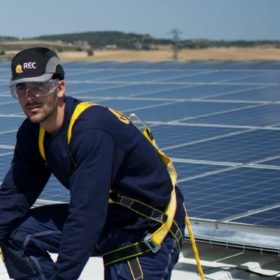
European PV market expected to grow by 35% in 2018 – GTM Research
European countries such as France, Germany, the Netherlands and Spain are all forecast to be gigawatt-scale markets in 2018. Globally, around 606 GW of new PV capacity is forecast to be installed between 2017 and 2022.

Solar deployment in developing countries soars by 54% YoY, finds BNEF
A total of 34 GW of new solar power generating capacity came online in 2016 in 71 emerging market countries, finds the latest Climatescope report by Bloomberg New Energy Finance.
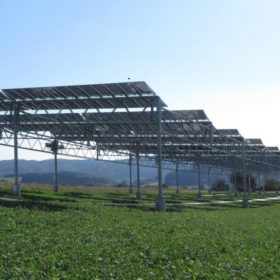
PV increases efficiency of cultivatable land use by more than 60%, Fraunhofer ISE says
Until now, cultivatable land was destined either for the generation of energy, or for food production. However, a pilot project, run by the Fraunhofer ISE, shows the two are compatible.
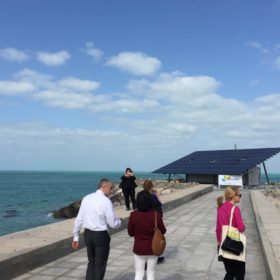
French forces unite to develop solar PV desalination plants
Two French companies have partnered to develop projects that combine renewable energy generation with water desalination. This is an area the solar sector is targeting specifically for the developing world, due to its off-grid compatibility.

DNV GL: AI will make renewables more efficient
A paper published by consultancy DNV GL forecasts major growth in the use of artificial intelligence (AI) applications within renewable energy, and outlines the risks and opportunities of such technologies.
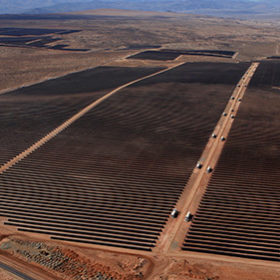
Increased competition in RE auctions raises risk of mispricing, Moody says
A report from Moody’s Investor Services on the importance of evaluating a series of factors other than declining costs of renewables and economies of scale, when approaching a competitive auction.
Corporate solar funding slips YoY finds Mercom Capital
Total corporate funding in the solar sector has slipped slightly in the first nine months of this year, compared to the same period in 2016 reports Mercom Capital, despite increases in global VC funding and M&A transactions. Some strong quarterly gains were, however, recorded. Downstream remains a key funding focus.
Lazard shows ongoing cost declines in solar (w/ charts)
The consultancy’s 2017 study finds that the global cost of utility-scale solar has reached an unsubsidized LCOE of under $50 per megawatt-hour, making new solar cost-competitive with running existing coal or nuclear plants.

Global storage market to double six times by 2030, BNEF reports
Global cumulative storage deployment will double six times between 2017 and 2030 to reach 125 GW/305 GWh, with as much as $103 billion pouring into the sector, finds new report by Bloomberg New Energy Finance.

Switching to solar can boost education, prosperity for developing world, study finds
Research from the Overseas Development Institute estimates that children in developing world can gain 15 minutes extra study time a day if their homes switch from fossil fuel to solar, while households can enjoy savings of $10 per month.
