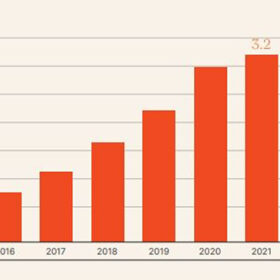
Rooftop solar surges ahead in Australia with 1.3 GW installed in H1 2024
Australian households and small businesses continue to spearhead the nation’s renewable energy transition with a new report revealing that 1.3 GW of rooftop solar capacity was installed during the first half of 2024.

Australia has 103 GW of rooftop PV potential, says think tank
A new Climate Council report estimates Australia’s rooftop solar potential at 103 GW – four times the nation’s current installed capacity.
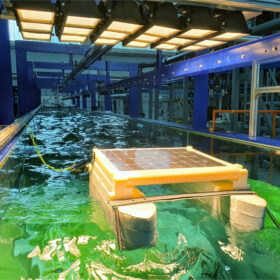
Scientists create setup to measure wave-induced power losses in floating PV
Researchers have measured the power loss of a 50 W panel stationed in a 30-meter wave tank. Based on ten different scenarios, they were able to draw an empirical equation for the prediction of power loss, with the highest loss being measured at 12.7%.
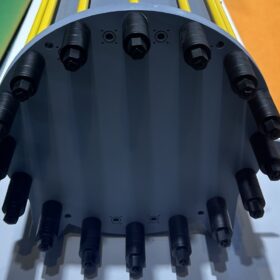
Australia launches multimillion-dollar green hydrogen auction with Germany
Investment confidence in Australia’s green hydrogen industry has received a $660 million boost following a joint declaration with Germany to negotiate supply chains that guarantee European buyers for Australian products.

Nanoparticles, phase-change materials in PVT systems
Scientists have used varying levels of Al₂O₃ and ZnO paraffin wax to improve the electrical and thermal performance of a photovoltaic-thermal (PVT) system. They have also developed a prediction model for this specific combination of hybrid nano-phase change materials.
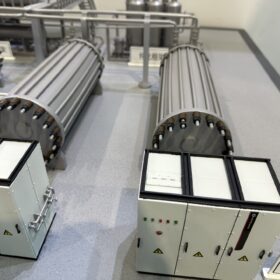
New method to calculate levelized cost of hydrogen
Scientists in Australia have incorporated overload capacity and power-dependent efficiency of the electrolyser in a novel techno-economic model to calculate the levelized cost of hydrogen. The proposed methodology was applied to ascertain the impact of internalizing environmental costs on the cost-competitiveness of green hydrogen compared to grey hydrogen.
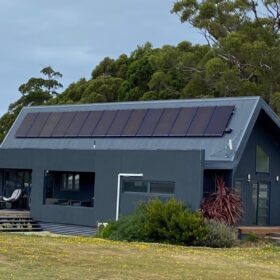
Australian rooftop PV sector rebounds with record 302 MW rollout
Australia’s rollout of rooftop solar has climbed to a record high with households and businesses bolting on almost 302 MW of generation capacity in July, up 23% on the previous month.
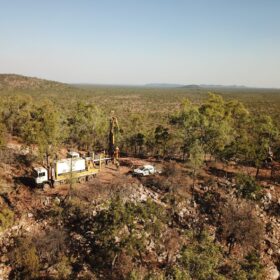
Australian polysilicon project shifts focus to silica feedstock
Quinbrook Infrastructure Partners’ plan to build a “state-of-the-art” polysilicon manufacturing plant in Australia has taken a step forward, with Australian Silica Quartz starting a drilling program at a planned mine site that could provide feedstock for the proposed facility.

Singapore fund acquires solar developer in New Zealand
Singapore-based renewable energy fund manager SC Oscar has purchased New Zealand solar project developer Rānui Generation as part of its strategy to build a portfolio of renewable energy assets in New Zealand and Australia.

Australia: Drilling survey offers positive assessment for 120 GWh pumped hydro project
Plans to build a 5 GW/120 GWh pumped hydro energy storage system in Queensland’s Pioneer Valley have received a positive boost with geotechnical investigations revealing the site is ideally suited for dam and tunnel construction.
