
Tongwei moves into hybrid heterojunction back contact solar cell technology
Tongwei is partnering with GS-Solar and Golden Solar to develop a large-scale manufacturing facility for hybrid heterojunction back-contact (HBC) solar cells that combine heterojunction passivation, tunneling oxide and polysilicon structures used in TOPCon designs, and the grid-free front-side architecture typical of back-contact technologies.

‘Back contact will reach cost parity with TOPCon before end of decade’
During a pv magazine Week Europe 2025 webinar, panelists forecast back contact (BC) solar cells’ market share will draw level with TOPCon towards the end of the decade, before tandem technology begins large-scale momentum in the early 2030s.
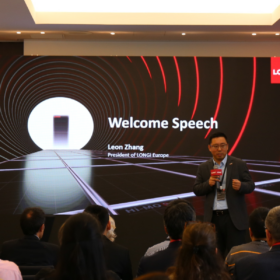
LONGi case study data finds BC outperforms TOPCon on generation and cost
At its October “Utility Day,” the company shared its latest financial data with German customers, affirming top market positioning and financial health.
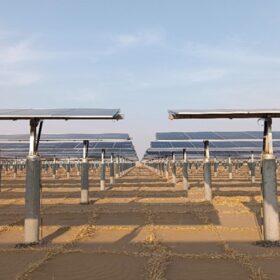
Longi BC modules surpass TOPCon output by 2.45% in desert comparison
The company says data from a recent empirical project show that its Hi-MO 9 back contact (BC) modules outperformed conventional TOPCon modules in a head-to-head comparison in a desert environment with harsh climate conditions.

Non-stop solar innovation despite module oversupply
It’s no secret that prices throughout the solar supply chain have been at rock bottom over the past 18 months. Alex Barrows and Molly Morgan of CRU Group explore how the market reached the imbalance that caused PV prices to crash, what this has meant for innovation, and how it might affect future technology transitions.
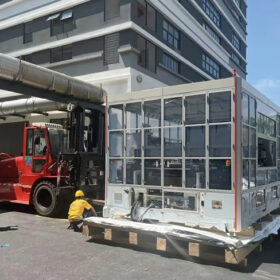
Collaboration key to scaling new technology
Both the solar module and battery manufacturing industries have been dealing with excess production capacity in recent years, and each is undergoing its own set of market adjustments in 2025. This has meant challenging conditions for manufacturing equipment suppliers in either sector. But there is still plenty of opportunity to deploy the latest technologies at scale, and to assist suppliers moving into new regions. The long-term outlook for both sectors is strong, as pv magazine heard from Wang Yanqing, Chairman of solar and battery production equipment supplier Lead Intelligent, headquartered in Wuxi, China.

Weekend Read: Famine to feast – China’s solar market in 2023
China’s solar industry rebounded in 2023 after years of pandemic-related sluggishness. As the year draws to a close, pv magazine looks back at key highlights of 2023 and considers the prospects for 2024.
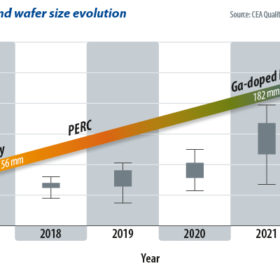
Get what you pay for
Clean Energy Associates (CEA) has calculated the price premium that solar developers will swallow in return for the levelized cost of energy (LCOE) savings offered by the latest generation of high-efficiency PV panels.
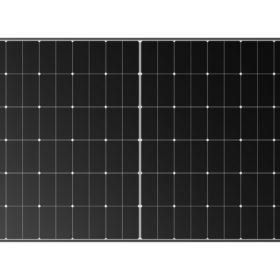
Longi launches all new back contact module, promising 22.8% efficiency
Longi has launched a series of modules featuring an all-new hybrid passivated back contact cell technology, with which it claims a maximum module efficiency of 22.8% in mass production. It will initially offer the modules in 54, 60, 66 and 72 cell formats, targeting rooftop and distributed generation applications.

Webinar Q&A: The future of back contact technology
Last month, in a pv magazine Webinar held in partnership with Endurans Solar, we took a closer at Endurans’ conductive backsheet for back contact modules, and examined recent progress in back contact cell and module technologies, and their growing market potential over the next few years. Here, presenters Hugo Schoot, Business director at Endurans Solar, and Bram Verschoor, CCO at equipment supplier Eurotron, answer a more of the questions posed by the audience during the webinar.
