
Venture capitalist sees billion-dollar opportunities for solar and storage innovators
Bill Nussey describes in his new book a much larger role that he foresees for local solar and storage, and a correspondingly altered role for electric utilities.

Australian miner’s lithium ambitions cop a battering
Anglo-Australian mining giant Rio Tinto’s ambition to become one of the world’s largest lithium suppliers has taken a battering with the Serbian government pulling the plug on the company’s $3.3 billion ($US2.4 billion) Jadar lithium-borates project.

Tesla Energy results up, but mixed, for 2021; solar makes nary a sound on quarterly call
On the company’s Q4 earnings call, the world-leading EV manufacturer again prioritized delivering cars over growing low-margin energy storage products, while solar products were barely noted. Both verticals grew though, solar by 68% and storage by 32%.
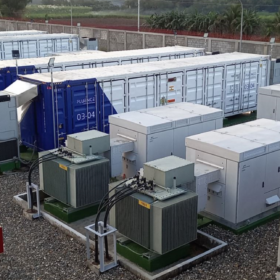
Philippines’ first utility scale battery for grid stabilization
The first 20MW/20MWh battery energy storage system in the 470MW/470MWh portfolio Fluence is deploying for Filipino conglomerate San Miguel Corp has started serving the island nation’s electricity network.
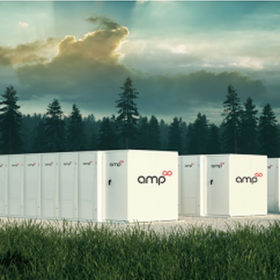
Europe’s largest battery storage project leverages grid-forming inverter tech
Toronto-based developer Amp Energy has had the green light to install two 400MW batteries in central Scotland which have been touted as the largest grid-connected battery storage facilities in Europe. The projects will deploy grid-forming inverters and be coupled with two synchronous condensers.

Italy’s steeplechase towards battery deployment
In the next ten years, according to Milanese consultant REF-E’s simulations, storage in Italy will mostly be driven by opportunities in the ancillary services market. After 2030, when renewables will provide most electricity, REF-E believes the price spread between different hours of the day should be high enough to cover the cost-per-cycle of energy-intensive storage. Energy expert Virginia Canazza discussed the topic with pv magazine.
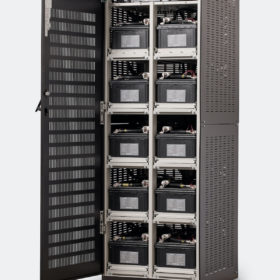
Nickel-zinc batteries for large scale backup power
Nickel-zinc batteries will be coupled with wind power to support 30MW of critical IT load at a data center in Wyoming, in the US. The batteries’ lifespan can be up to 15 years, while its roundtrip efficiency stands at 85%.
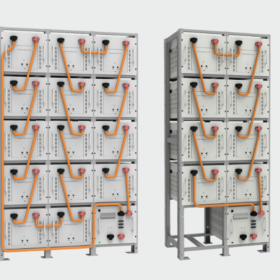
Atess unveils battery with active balancing technology
The Chinese manufacturer has upgraded its commercial application battery with a dissipative balancing technology that, it is claimed, will make the storage system suitable for different load conditions. Each battery module is sold with a capacity ranging from 100 to 200Ah and a storage capacity of 7.68kWh.
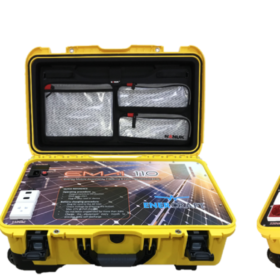
Spanish start-up unveils 1kWh portable battery for multiple uses
The portable storage system contains lithium batteries, a charger, and an inverter, all fully integrated into a sealed and protective case.
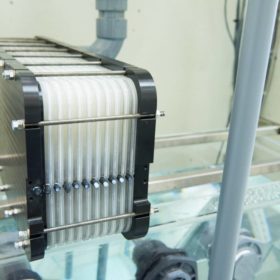
Zinc-air battery, CHP and PV to power apartment complex in New York
A 100kW/1.5MWh zinc-air battery will be installed in Queens, New York, in combination with a combined heat and power system and a PV array. The pilot project is intended to demonstrate the long-duration energy storage capability of the zinc-air battery.
