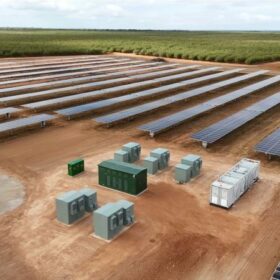
Australian utility delivers PV-powered microgrid for farm operation
AGL Energy has completed the installation of a solar-powered microgrid with a 5.4 MWh battery energy storage system in Australia to support the transition of a commercial orchard’s operations from diesel to renewables.

Solar, wind completely replace diesel at South Pole Station
Researchers from the Argonne National Laboratory have concluded that renewable energy could partially replace diesel fuel to power instruments and provide heat at the South Pole. They have proposed a solar, wind and energy storage hybrid that could reduce diesel consumption by 95% and save approximately $57 million over 15 years, after an initial investment of $9.7 million.

Standalone PV-plus-storage system for EV recharging
Indian scientists have designed an off-grid power system that relies on solar panels, lithium-ion batteries and Ćuk converters. The converters are the crucial components that enable the system to deal with varying input voltage due to changing sunlight conditions.
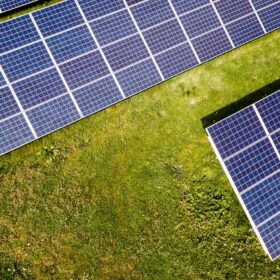
Lightsource bp unveils plans for solar-plus-storage in Ireland
Lightsource bp says it plans to develop a solar-plus-storage facility in Ireland. The proposed installation will feature a 57 MW solar array and a 54 MW energy storage system on an open grassland site in the eastern part of the country.

Off-grid solar-wind power plant design for green hydrogen generation
Scientists in Czechia have conducted a techno-economic analysis of a green hydrogen production system powered exclusively by photovoltaic and wind energy. The system uses surplus energy for water treatment and, according to its creator, can achieve a levelized cost of hydrogen of $3.12/kg.
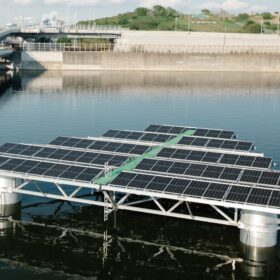
SolarDuck, Tokyu Land install Japanese floating solar pilot
SolarDuck and Tokyu Land have installed a floating solar demonstration unit in Japan. This project is billed as the nation’s first offshore floating solar power plant on the surface of the ocean and will be used to power electric vehicles and boats.
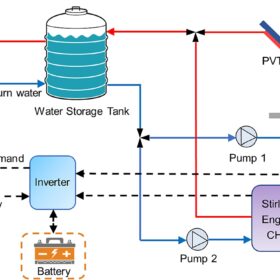
Powering homes with PVT energy, Stirling engines, battery storage
UK scientists have proposed a way to combine photovoltaic-thermal energy with Stirling engines and battery storage in residential buildings. Despite the high upfront costs, they said the cost-effective hybrid co-generation system could significantly reduce CO2 emissions.
Japan allocates 1.09 GW of storage in capacity auction
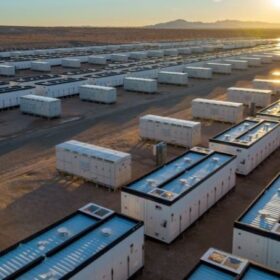
The Japanese authorities selected 30 battery storage projects in the procurement exercise. The selected developers and plant owners will be awarded a 20-year fixed revenue.

India’s first utility-scale, standalone storage project gets regulatory nod
BSES Rajdhani Power’s new 20 MW/ 40 MWh project is India’s first utility-scale, standalone battery energy storage system to secure regulatory approval under Section 63 of the Indian Electricity Act, 2003. The project is supported by a concessional loan from the Global Energy Alliance for People and Planet (GEAPP).

Buildings can offer gigawatts of new peak capacity as ‘batteries’
Modeling shows that shifting just one-third of the electricity consumption of commercial and institutional buildings in Australia to the middle of the day, coinciding with peak solar supply, would create almost 12 GW of new peak capacity in the National Electricity Market.
