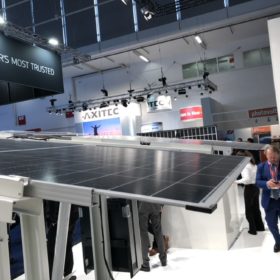
New cell efficiency records for Trina and Canadian Solar
Chinese PV manufacturer Trina Solar today announced it has achieved a new efficiency record of 24.58% for a cell based on n-type monocrystalline TOPCon technology. The record has been confirmed by the ISFH CalTeC laboratory in Germany. Meanwhile, fellow giant Canadian Solar also hit a new milestone with its cast mono technology, reaching 22.28% conversion efficiency on a 157mm² wafer.

Bifacial module demand continues to grow
Module technologies such as bifacial, half-cut, multi-busbar (MBB), and shingled are maturing after two years of improvement. Comparing module technologies, we see that half cut has a high degree of maturity in production equipment, high yield rates, and output climbing since the beginning of 2018. From late 2018 to 2019, most companies have expanded or upgraded their portfolios by pairing half-cut technology with MBB technology.
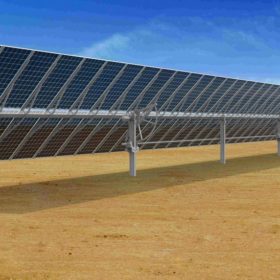
Arctech unveils new single-axis tracker
The device, conceived for large scale solar, is said to solve the instability issues associated with the two-modules-in-portrait structure and to have the largest south-north slope seen in the tracker industry.

Canadian Solar sells 80% of 482 MW portfolio in Brazil to Qatar’s Nebras
There are four PV projects and all the facilities will use bifacial panels provided by the Brazilian factory of the Chinese-Canadian manufacturer.
AE Solar to open 500 MW European module factory in Georgia
The German panel maker said the new factory, which will add to its 525 MW facility in China, will expand its production capacity to 1 GW. With plans in the pipeline to enter the PV project business, that figure could rise to 2 GW by the end of next year.
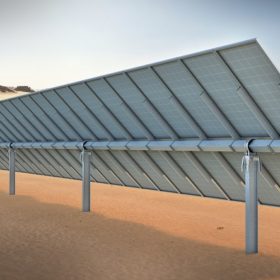
Rise of bifacial lifts profits for the world’s tracker companies
Things are hotting up in the tracker world as the desire to squeeze down the price per Watt of solar power intensifies. And the rise of the trackers is attracting some well-known businesses to buy their way into the field.
Chinese manufacturer Seraphim’s new 1 GW module fab will produce bifacial, half-cut modules
The Changzhou-based company, which has established the Shanxi facility with state-owned rival Shanxi Lu’An Photovoltaics Technology, has not revealed what proportion of the factory’s output will feature the high efficiency technology.

Longi’s 5 GW high-efficiency mono PERC factory will be at full capacity ‘soon’
The Chinese panel maker is already producing bifacial half cut modules at its new Anhui fab after the completion of an initial 2.5 GW phase of operations. And the company president confirmed Longi is on track for 45 GW of mono wafer and ingot production capacity next year.

Smart Energy Week in Tokyo: Self-consumption, storage and a plentiful pipeline for now
Though we’re unlikely to see a return to the days of double-figure GW annual installation levels, Japan will stay at the top table of solar. Last week, pv magazine visited PV Expo Japan, part of Tokyo’s World Smart Energy Week, and found plenty of market developments to discuss, along with healthy interest from major players.
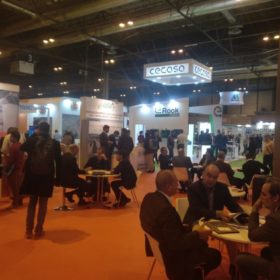
Spain’s Genera event dominated by PV as it draws the crowds
Spain’s most important renewable energy fair is becoming increasingly about solar. After a decade of slim pickings, last year’s event promised better times and, if this year’s show didn’t completely deliver, that’s because elections loom large.
