
Perovskite thin film: Out with the old, in with the new
Silicon-perovskite tandem solar requires optimization of both approaches, and embodies the weaknesses of each. Meanwhile, the use of pure thin-film devices offers a cheaper, simpler, and more sustainable PV solution for the United States.
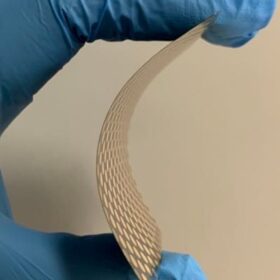
Cadmium telluride solar cell based on indium gallium oxide emitter achieves 17.2%
Developed by the University of Toledo, the cell achived the highest efficiency ever reported for flexible cadmium telluride solar cells to date. The device reached an open-circuit voltage of 861 mV, a short-circuit density of 27.8 mA/cm2, and a fill factor of 71.7%.
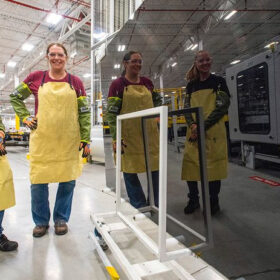
Weekend Read: The fruitful search for other thin films
First Solar and its cadmium telluride (CdTe) technology dominate thin-film solar in the mainstream market. Valerie Thompson looks at the US-based business and the future of thin-film PV technology.
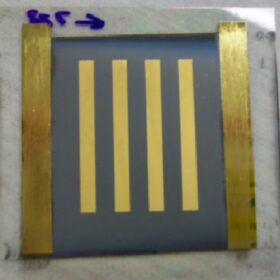
Cadmium telluride solar cells show strong resistance after 30,000 orbits around Earth
Researchers in the United Kingdom have tested the perfomance of cadmium telluride solar cells deployed on the AlSat-1N 3U CubeSat satellite from 2016 to 2022. Their findings show the devices exhibited no significant performance changes, nor any sign of delamination.
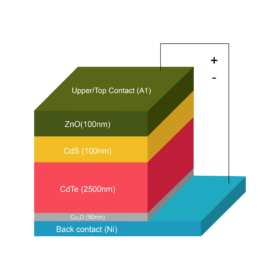
Novel cadmium telluride solar cell design with potential efficiency of 31.82%
Scientists in Bangladesh designed a cadmium telluride solar cell with upper/top and back contact materials made of aluminum (Al) and nickel (Ni). The device reportedly showed a quantum efficiency of around 100 % at visible wavelengths.

Weekend Read: New turf for thin films
Thin-film technologies have long promised to make a major impact on the solar industry but have largely been constrained to niche applications and research labs if they were not shredded by the market. After several false starts, current trade dynamics and promising research programs may help solar thin films find their place in the sun.
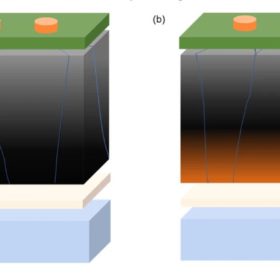
Cadmium selenium telluride solar cell achieves 20% efficiency via bandgap gradient
US scientists have applied bandgap gradient to a cadmium telluride PV cell for the first time. The result is an improvement of its efficiency and open-circuit voltage, and lower non-radiative recombination.
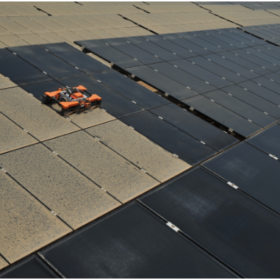
Impact of dust, heat, soiling on solar project performance
Scientists in Morocco recently conducted a year-long study on the impacts of soiling on PV modules in arid, dusty conditions. They found that soiling could contribute to daily performance losses of as much as 15%.
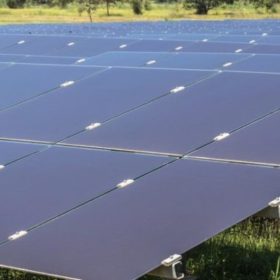
Made-in-USA solar for stable supply chains, lower emissions, fair labor
Toledo Solar founder Aaron Bates joined pv magazine USA to explain the benefits of US-made solar and cadmium telluride technology.
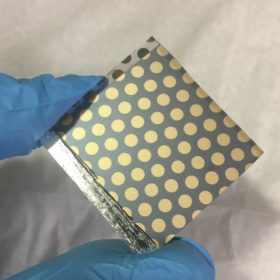
Rear-side passivation for 17.4% efficient CdTe thin film
Scientists in the United States investigated adding a layer of copper-aluminum oxide to the rear side of a cadmium-telluride thin film cell, finding positive impacts on carrier lifetime and efficiency. With further work, the scientists say, the discovery could open up new routes to higher efficiencies in CdTe solar cells.
