
First Solar breaks ground on 3.3 GW module factory
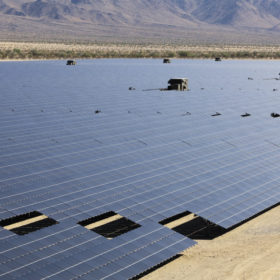
First Solar has started building a new PV module factory in the U.S. state of Ohio. The $680 million facility is scheduled to start operations in the first half of 2023.
First Solar plans a 3.3 GW Indian module fab
The U.S.-based manufacturer is planning a vertically integrated thin-film solar module manufacturing facility in India. The factory will likely be built in Tamil Nadu and become operational in the second half of 2023.

US government, NREL seek consortium leaders for thin-film PV module advancement
The U.S. Department of Energy has released $20 million in funding to solicit participation in a consortium of leaders, organized by the National Renewable Energy Laboratory, that will focus on thin-film cadmium telluride module development.

First Solar to add 3.3 GW of capacity in a new $680 million US factory
The 1.8 million-square-foot facility is projected to create 500 jobs and produce an enhanced thin-film PV module for the utility-scale solar market in the U.S.
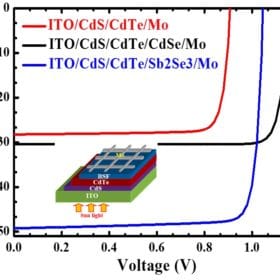
CdTe heterojunction solar cells based on antimony selenide back surface field layers
An international research group is seeking to increase the efficiency of heterojunction cadmium-telluride solar cells by applying back surface field (BSF) layers made of antimony selenide. It claims the addition of this compound may raise CdTe cell efficiency by around 9% and has the technical potential to reach efficiencies over 40%.

IEA highlights solar’s dependence on Chinese copper processing
The sheer volume of new power lines which will be required to accommodate the rising tide of solar installations ensures copper has been included by the International Energy Agency on its list of minerals which must keep flowing if the energy transition is to stay on course. And it’s not production that’s the potential bottleneck.

Future of cadmium telluride PV tech
In the third interview of a series, pv magazine spoke to Prof. Arvind Shah of École polytechnique fédérale de Lausanne and Associate Prof. Alessandro Romeo from the University of Verona about the challenges and opportunities of cadmium telluride (CdTe) PV tech. They said there is still potential to ramp up efficiency and cut costs, and claimed that the toxicity of cadmium should not be seen as a serious concern.
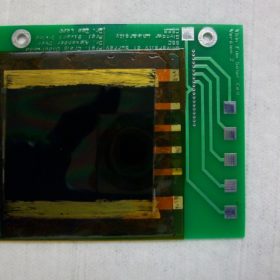
Cadmium telluride solar cells for space applications, BIPV, unmanned aircraft
U.K. researchers have developed a flexible thin-film cadmium telluride (CdTe) solar cell for use in ultra-thin glass for space applications.

CNBM wants to set up GW-scale production of CdTe solar panels in China
German PV production equipment provider Singulus will supply the vacuum coating systems for the new production. The Chinese conglomerate currently operates CIGS panel production facilities at four different locations in China.

First Solar claims lowest module degradation rate in the industry
The US cadmium telluride thin-film module maker said its Series 6 CuRe panels are able to retain 92% of its performance at the end of the 30-year warranty. The improved stability of the product was achieved by eliminating copper and placing Group V elements such as antimony or arsenic onto the tellurium crystal sites.
