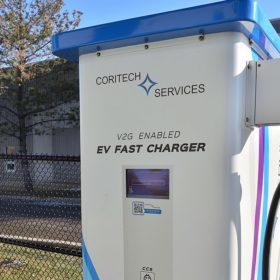
Imagine a nationwide energy system relying solely on distributed PV and V2G-equipped electric vehicles
Norwegian researchers have sought to assess the theoretical technical feasibility of a country-level energy system based exclusively on distributed solar, electric vehicles, and vehicle-to-grid technologies. They applied the model to sunny Spain and found that 3.45 billion m2 of PV systems would be necessary to build a 100% self-reliant energy system.
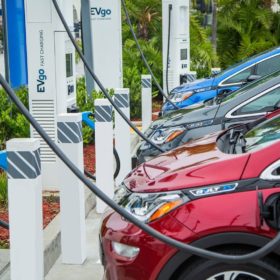
How safe are smart EV chargers?
Research has uncovered critical security threats associated with a number of common smart electric-vehicle chargers, but it’s not too late or too logistically difficult to remedy the issues.
US company using 3D printers to make solid-state battery tech for EVs
California-based Sakuú Corp. has started work on a 2.5 MWh per year pilot facility to produce 3D-printed solid-state battery tech.
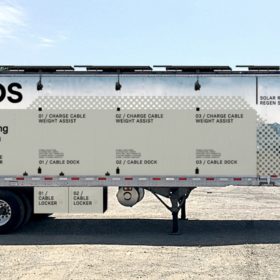
Portable charging trailer for commercial EV fleets
U.S.-based Xos offers a mobile charging station for commercial electric fleets, in order to provide power without making fixed infrastructure upgrades.
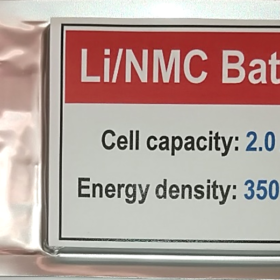
New battery chemistry tweak could double EV range
Researchers at the Pacific Northwest National Laboratory have developed a revolutionary lithium-metal battery chemistry that could allow electric vehicle batteries to almost double their capacity, while also overcoming historic setbacks.
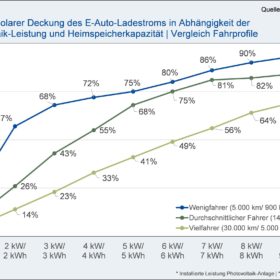
Solar+storage could provide 80% of annual EV power needs
A new EUPD Research report shows that a PV system can cover 39% of the power demand of an electric vehicle, but this potentially rises to 80% if storage is included.
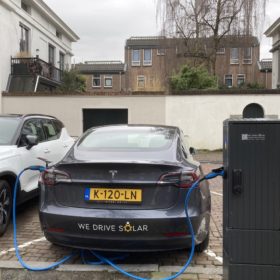
Electric cars to store renewables in the Netherlands
We Drive Solar and Hyundai are planning to set up a network of 500 bi-directional EV recharging stations in the city and region of Utrecht. Through this technology, electric cars may contribute to the storage of renewable energy in a country affected by grid constraints.

GM and LG Energy plan a $2.3 billion electric vehicle battery plant
The automaker’s future Ultium-powered EVs are designed for Level 2 and DC fast charging. Most will have 400V battery packs and up to 200 kW fast charging capability.
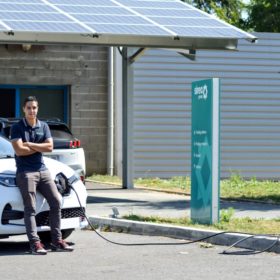
EV recharging station powered by solar, hydrogen
The recharging station was designed by French automation group Sirea. It is powered by a solar carport and a small electrolyzer.

Volkswagen, Iberdrola, Enel, BP to install EV recharging stations, battery plants in Europe
German car manufacturer Volkswagen plans to create a gigantic network of charging points for electric cars in Europe with Enel and BP. They aim to set up six gigafactories for EV batteries across Europe by the end of this decade, with a total production capacity of 240 GWh.
