
New research shows potential of hydrogen-source heat pumps
A new research project, thought to be the first to assess hydrogen as an energy source for heat pumps, has found that hydrogen-backed heat pumps could be an eco-friendly option for the building sector and support decarbonization in line with the UK’s net-zero targets.
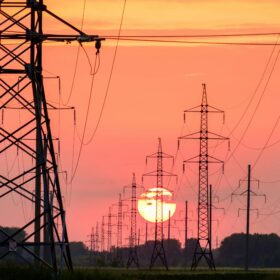
Sandia National Laboratories introduce grid-resiliency algorithms
Sandia National Laboratories developed software with tools to isolate downed or damaged lines, automate energy production and consumption regulation, and troubleshoot unintentional loops.

Grenergy secures PPA for 260 MW-1,100 MWh of solar-plus-storage in Chile
Grenergy said its new power purchase agreement (PPA) for 260 MW/1,100 MWh of solar-plus-storage in Chile has a duration of 15 years. The installation is part of the fourth phase of the massive 1 GW/4 GWh Oasis de Atacama solar-plus-storage project.
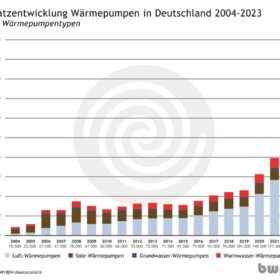
Germany hits 356,000 heat pump installations in 2023
Heat pump sales in Germany rose by more than 50% for the second year in a row in 2023, according to new figures from Bundesverband Wärmepumpe (BWP).
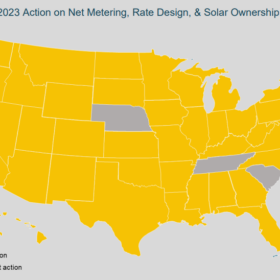
Distributed US solar and storage policy trends
The NC Clean Energy Technology Center covers the latest trends in US solar policy.
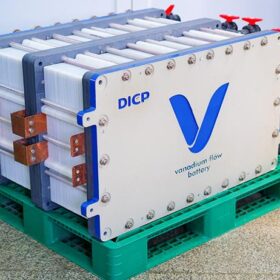
Chinese researchers develop high power density vanadium flow battery stack
Researchers at the Dalian Institute of Chemical Physics (DICP) in China have developed a 70 kW-level vanadium flow battery stack. The newly designed stack comes in 40% below current 30 kW-level stacks in terms of costs, due to its volume power density of 130 kW/m3.
Rising CO2 prices could make PV heat pumps cheap choice for German homes
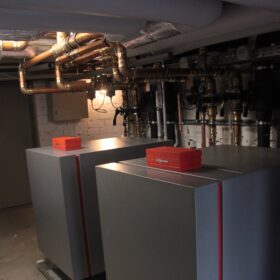
Germany’s Fraunhofer Institute for Solar Energy Systems (Fraunhofer ISE) says rising CO2 prices could make PV-powered heat pumps the most cost-effective choice for residential heating in the country, with heat pump uptake and district heating adoption proving more economical than replacing gas heating.
WoodMac predicts strong yet flat global PV growth through to 2032
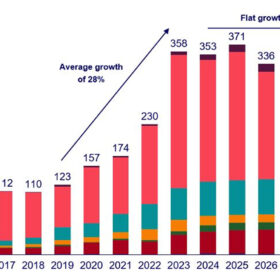
Wood Mackenzie says the solar industry has reached a new stage in its evolution and is predicting around 350 GW of global solar installations annually for the next eight years. The research firm is also forecasting challenges for the solar manufacturing sector and long-awaited benefits from the Inflation Reduction Act in the United States.
Thermoacoustic refrigerator-heat pump with direct-coupling configuration
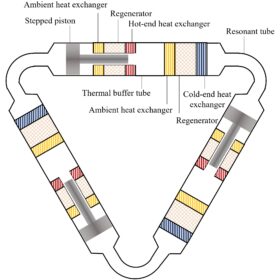
Researchers in China have designed a heat-driven thermoacoustic refrigerator/heat pump for room refrigeration. They said the system is easily combinable with PV energy and its coefficient of performance can reach up to 1.69.
Pioneer Power Solutions unveils mobile off-grid EV charging trailer
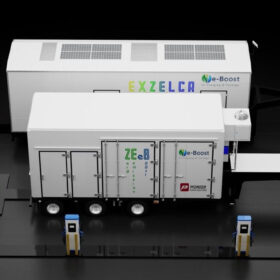
Pioneer Power Solutions has announced a new lithium battery trailer for electric-vehicle charging and disaster recovery.
