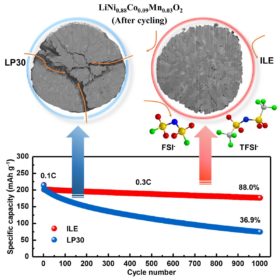
Lithium-metal battery with capacity retention of 88% over 1,000 cycles
German scientists have applied a new combination of cathodes and electrolytes to improve the stability of lithium-metal batteries. They fabricated a device with an energy density of 560 watt-hours per kilogram and a Coulombic efficiency of 99.94%.
Canadian Solar posts solid Q2 results, lowers 2021 shipment guidance
The solar PV module manufacturer reported strong growth for its energy storage business and an overall 105% year-on-year turnover growth. Its total module production capacity reached 19.7 GW at the end of June.
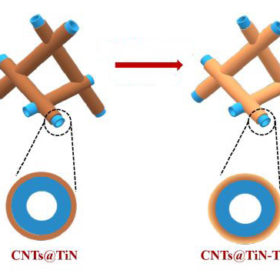
Lithium-sulfur battery with shorter charging time, longer lifespan
Japanese scientists have developed a new lithium-sulfur battery by using titanium oxide and titanium nitride to prevent the formation of polysulfides during the fabrication process. This allows the battery to retain 85% of its capacity after 500 cycles at 2 C.
Indian researchers increase hydrogen yield three-fold through carbon-cobalt catalyst interface
The researchers showed a premagnetized carbon-cobalt catalyst interface could deliver up to 650% enhancement in electrocatalytic kinetics of hydrogen evolution reaction. The synergistic interface was able to sustain magnetization, and thus rapid hydrogen evolution rate, for prolonged time periods.

Energy storage with recycled batteries from Brazil
Energy Source, a Brazilian battery specialist, is currently providing energy storage services with reused and recycled batteries. Battery recycling and related metals recovery are conducted separately, without the burning of materials.

Australia to host 600 MW/2400 MWh storage facility
Renewables developer Syncline Energy has revealed plans for a 600 MW/2400 MWh battery storage project near Melbourne.
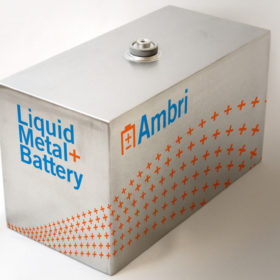
US start-up secures $144 million for liquid metal battery commercialization
Ambri plans to commercialize its calcium-antimony liquid metal battery chemistry and open manufacturing facilities to deliver projects in 2023 and beyond.
The Hydrogen Stream: Russia unveils hydrogen strategy, Germany provides more funds for power-to-X
ThyssenKrupp has also said it is working on a green hydrogen and ammonia project in the Emirates and three U.S. companies are planning to develop low-cost renewable hydrogen generation for use in transportation and distributed energy applications.
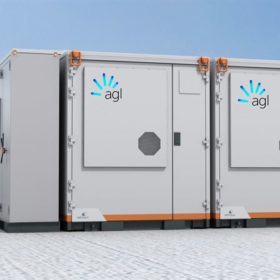
World’s largest ‘grid-forming’ battery to begin construction in Australia
Australia’s AGL Energy will soon own the world’s largest ‘grid-forming’ battery, with construction to begin on its new 250 MW/250 MWh project later this year on Torrens Island, South Australia. Finland’s Wärtsilä will supply the battery, while Germany’s SMA will provide inverters.
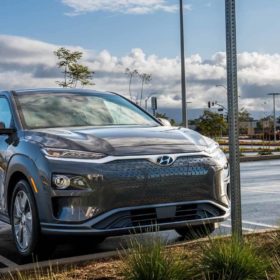
Hyundai and UL ally to give EV batteries a second life
The two agreed to advance safe deployment and use of second-life battery energy storage systems.
