
Tungsten disulfide helps organic solar cell reach 17% efficiency
Researchers from Saudi Arabia’s King Abdullah University of Science and Technology claim to have developed a highly performant organic PV cell using tungsten disulfide flakes a few atoms thick. The stability of the device, however, is still to be evaluated.
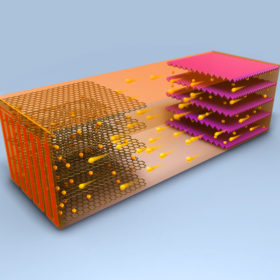
Charging an electric vehicle in 10 minutes
Scientists from Penn State University have developed a self-heating battery for electric vehicles which is said charge in only 10 minutes at 60 degrees Celsius.

The land that solar (almost) forgot
Almost all of the energy supplied in the Buddhist kingdom of Bhutan comes from 1.67 GW of hydropower capacity but with a rising population and energy demand, and an expanding economy, the 12 GW of solar the International Renewable Energy Agency estimates the Himalayan nation could host might reduce the risk of climate change-related blackouts.

Cutting edge module tech promised on first, 3 GW slice of 10 GW Chinese solar installation
Huanghe Hydropower Development has started work on the first phase of a huge renewable energy project which will eventually feature 10 GW of solar generation capacity along with 5 GW of wind and 1 GW of concentrating solar power. Trina will supply 600 MW of modules to the first phase of the facility.
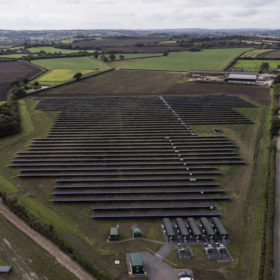
Green shoots of recovery
There has been significant progress in the decarbonization of the electricity supply in Great Britain in recent years, underscored by a record run of 19 days of zero coal generation in May and June 2019. With National Grid’s stated aim of operating a carbon-neutral electricity system by 2025, the co-location of PV with battery storage could play a key role. The proposition offers the twin benefits of enabling increasingly high renewables penetration while simultaneously improving network stability. Adam Sharpe of Everoze explores the role of co-located PV and energy storage assets within the context of the UK’s future decarbonization plans.

EU green-lights aid for European Battery Alliance
The European Commission has approved state aid for the so-called European Battery Alliance to promote the development of a lithium-ion battery supply chain in the European Union.

Winners do not always win
As part of a series of interviews on renewable energy and geopolitics, Indra Overland – head of the Center for Energy Research at the Norwegian Institute for International Affairs – explains why some countries will take the lead in the energy transition. All of the countries in Africa, with the exception of a few oil exporters, will be part of the solar revolution, he said, noting the recent release of the GeGaLo Index. He also looks at why big economies such as the United States, Germany, China and Australia are not geopolitically well-situated for the energy transition, and why others, such as Japan, France and Spain, are positioned more favorably. In addition, Overland discusses why it is particularly important that nations under strong political pressure grasp the benefits of clean energy.

Solar to the fore as Athens Airport announces plan for net zero carbon ground operations by 2025
Greece’s largest international airport has set a goal to operate as a net zero carbon emitter by 2025, mainly via investing in on-site solar. Should the goal be met, the airport will be Europe’s first to rely on self-generated electricity and operate with net zero emissions.
Scottish Power enters PV business
The distribution network operator for central and southern Scotland says it wants to maximize onshore renewables potential by adding solar and storage to its clean energy business. The company said hybrid projects combining wind, solar and storage will become the industry standard in 2021.

Coupling pumped hydro with renewables and other storage technologies
The combination of pumped hydro with other storage technologies can increase renewables penetration, improve operational safety and reduce maintenance costs at large-scale hydropower plants, according to new research. The study also focuses on techniques to determine the optimal size of renewables-based pumped hydro storage systems. Costs for hybrid solar-pumped hydro projects currently range from $0.098/kWh to $1.36/kWh.
