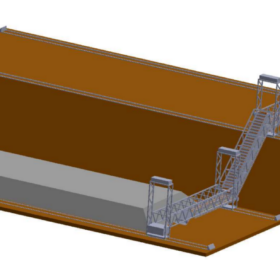
Indian startup develops sand-based gravity energy storage system
Baud Resources, a clean-tech startup, has developed a gravity energy storage mechanism that uses locally available materials such as sand and industrial waste as its payload. The company is building a 100 MWh pilot plant that will reportedly offer a levelized cost of storage of around INR 2.5 ($0.03)/kWh.
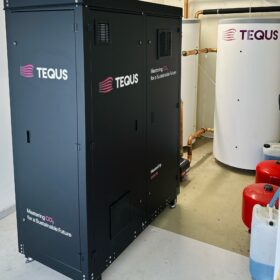
Norwegian startup unveils CO2 water-to-water heat pump
Tequs said its new plug-and-play heat pump can deliver up to 90 C of heat for space heating, air conditioning, and domestic hot water. The new product is available in eight versions with capacity ranging from 17 kW to 268 kW.
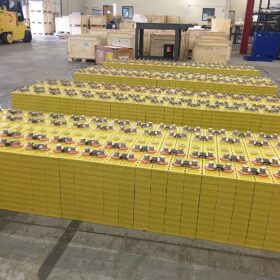
Battery makers oversubscribe India’s latest 10 GWh tender
The Indian authorities say the nation’s latest 10 GWh tender was oversubscribed. It attracted seven bidders, including ACME Cleantech Solutions, Reliance Industries, and Waaree Energies.
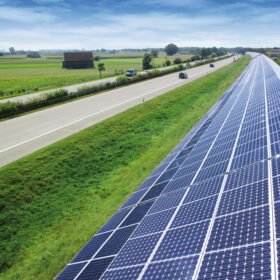
The fastest energy change in history still underway
In 2023, solar photovoltaics and wind comprised about 80% of global net generation capacity additions. Four times as much new solar and wind electricity generation capacity was installed in 2023 as compared with all other electricity sources combined.
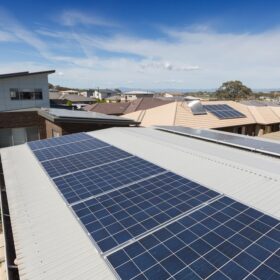
Australia announces community battery rollout
The Australian federal government’s initiative to install 400 community batteries across the nation has reached the Australian Capital Territory, with plans for three new battery energy storage systems.
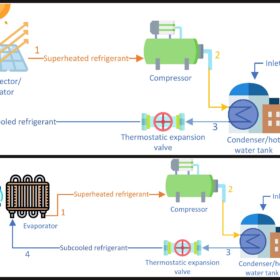
Solar-assisted heat pumps vs. air-source heat pumps
A group of researchers in Iran has analyzed the coefficient of performance and the energy consumption of a solar-assisted heat pumps and an air-source heat pumps and has found that three factors are crucial to determine their annual performance – irradiance changes, ambient temperature, and wind speed.
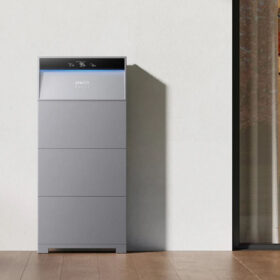
Anker Solix launches residential batteries
The new X1 can operate inside or out, from -20 C F to 55 delivering what Anker says is 100% power output without derating. The batteries are lithium iron phosphate (LiFePO4) and will reportedly remain fully operational for up to 3,000 charge cycles.

Renewables hit record levels in Australia as electricity demand rises
A new report by the Australian Energy Market Operator (AEMO) shows the nation’s clean energy transition is gathering pace with renewables, including large-scale and rooftop solar.
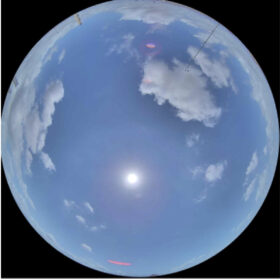
Solar forecasting based on all sky imaging, long short-term memory
A Dutch research team have developed a solar radiation forecasting model that uses the long short-term memory (LSTM) technique. The proposed methodology reportedly achieves better results than other forecasting approaches.
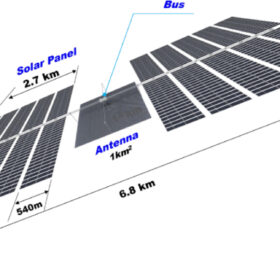
South Korea plans 120 GW space solar project
Two Korean research institutes are designing the 2.2 km × 2.7 km Korean Space Solar Power Satellite project with the aim of providing approximately 1 TWh of electricity to the Earth per year. The proposed system should use 4,000 sub-solar arrays of 10 m × 270 m, made out of thin film roll-out, with a system power efficiency of 13.5%.
