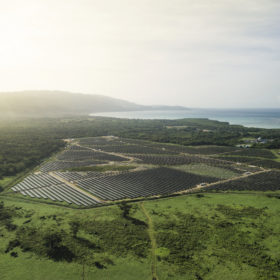
Caribbean neighbors move on solar, storage
Jamaica is lifting taxes on imported lithium-ion batteries, while Guyana has announced funding for eight big solar-plus-storage projects across three regions.
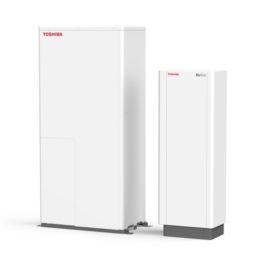
Toshiba expands fuel cell business
Toshiba is cooperating with Swedish battery specialist Echandia to develop pure hydrogen fuel cells that could be used for continuous operation in marine applications.
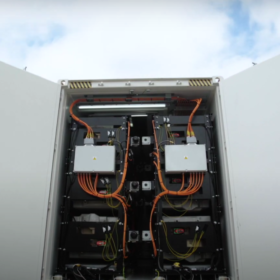
Hinduja Group invests in UK second-life battery storage specialist
India’s Hinduja Group has invested GBP 15 million ($18.4 million) with four other investors in Connected Energy, a developer of energy storage systems based on second-life electric vehicle batteries.
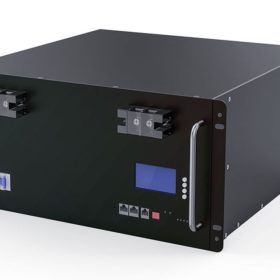
Indian manufacturer unveils battery with solar storage
India’s Natural Battery Technologies has developed lithium-based battery inverters that can be charged with solar power. The batteries are designed for residential and commercial use, with storage capacities typically ranging from 1.5 kWh to 20 kWh.

Harvard, Cambridge scientists improve durabiliy of redox flow batteries with anthraquinone
A research team has used a molecule known as 2,6-dihydroxy-anthraquinone (DHAQ) to improve the durability of organic aqueous redox flow batteries. They claim the molecule enables a net lifetime that is 17 times longer than past research has shown.

Open-source online platform shows how Europe may become energy-independent with renewables by 2050
European researchers have developed an open-source online tool that can identify areas where renewable energy and synthetic fuels can be cost-effectively produced, where hydrogen hubs could be built, and where grid expansion is needed. It can be used in different sectors across 35 countries.
Australian companies vying for $3.1 billion green hydrogen project in New Zealand
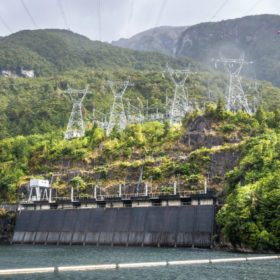
Fortescue Future Industries and Woodside have been selected as the two finalists in the race to develop what could be one of the world’s largest green hydrogen projects – a 600 MW facility in New Zealand.
US startup unveils non-flammable batteries for EVs, storage
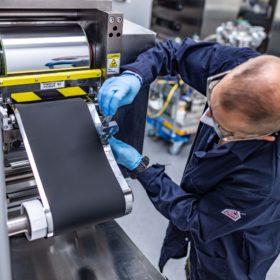
Alsym will produce its new batteries – made of readily available materials, without lithium or cobalt – for electric vehicles, stationary storage, and marine applications.
New in-roof PV system design from India
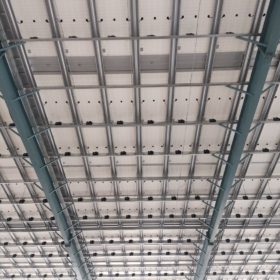
Ornate Solar’s engineering team designed, engineered and manufactured the new 530 kWp InRoof solar system in India. It serves as the primary rooftop for Pangaea Natural Stone’s factory in the Indian state of Rajasthan.
DEWA files patent for new redox flow battery tech
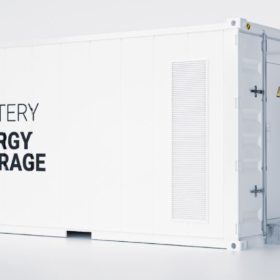
The Dubai Electricity and Water Authority says its novel redox flow battery stack offers better electrolyte distribution, which could result in higher power densities and lower manufacturing costs.
