
SolarPower Europe’s Watson: ‘I will never speak out against renewables’
It was EPIA when he joined, and the European and global solar industry was a very different place. Outgoing CEO of what is now SolarPower Europe, James Watson has presided over a transformative period at the organisation, and departs to head up Eurogas right at the point the region’s solar sector is set for revival. Advancing a power-to-gas agenda, Watson says, will be a big part of his new challenge.
Regional EU leaders demand clarity for energy communities
Consumer- and municipally-owned energy systems are lauded as key elements of the energy transition. However, their market design in many regions is still prohibitively complex. The European Committee of the Regions has presented a policy recommendation to address these issues, and enable a just and democratic energy transition.
EU uses energy industry to strengthen euro against US dollar
The European Commission has adopted a recommendation to promote the wider use of the euro in international energy agreements and transactions. The aim is to strengthen the role of the single currency on the international financial system.
EU confirms increased renewables ambition as an early Christmas present
Political bloc wants to source at least 32% of energy from renewable generation by 2030 and signed off on the more ambitious target as a statement of intent during the first week of the Katowice climate change conference.
EU-funded initiative set to launch new anti-soiling coating
A project backed by the European Union’s Horizon 2020 program says it has developed a self-cleaning coating for modules which is also anti reflective and weather resistant. The project – SolarSharc – expects to launch the product next year.
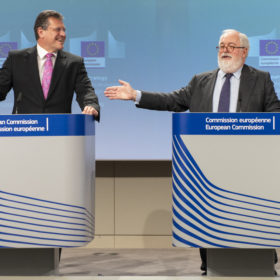
EU Commission presents plan to go carbon neutral by 2050
As part of its Paris Agreement obligations, the EU Commission has presented a carbon-neutral vision for 2050, which encompasses GDP growth through smart investments and public health savings.
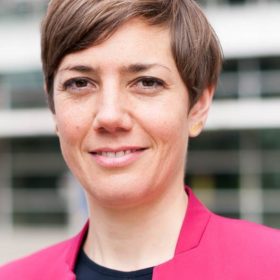
SolarPower Europe appoints new CEO
Walburga Hemetsberger has led the EU Representation Office of Austrian energy company Verbund AG for the past 10 years. At the same time, she was also a board member of Hydrogen Europe, in charge of Energy Transition Solutions.
EU Parliament approves RE directive
The European Parliament has today approved half of the eight legislative proposals of its Clean Energy Package, including the recast Renewable Energy Directive.
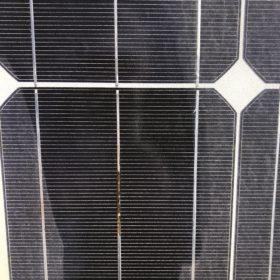
High-yield recycling of PV modules demonstrated by EU team
A project has demonstrated the numerous advantages of PV recycling and highlighted three techniques to turn panel waste into high-value materials.

Report eyes alternative battery technologies due to socio-ecological concerns
Lead, sulphuric-acid, nickel, cobalt and rare earth metals are highly toxic and have adverse impacts on the environment and the societies in which they are mined. As the EU is looking to become a world leader in battery production, a report considers new battery technologies – such as sodium-ion – which would have less negative impacts.
