Weekend read: A game of risk
The rising popularity of “baseload” power purchase agreements (PPAs) has posed questions to solar electricity suppliers in the German market. How can projects that do not generate at night, and with wide seasonal output variation, effectively supply constant power to consumers? More importantly, who shoulders the price risk?

Google lends a hand in the search for new solar cell designs with open-source tool
Scientists in the United States developed a computer simulator that can calculate the conversion efficiency of different solar cell materials and configurations – helping to guide research and optimization of new cell designs. The simulator is available to researchers as an open-source tool to save time and spot the best opportunities for optimization of any given approach.

Re-Source 2021 Recap
Re-Source 2021 took place in Amsterdam at the end of last week, and pv magazine was there to cover the event where the suppliers and sellers of renewable power purchase agreements (PPAs) meet the (largely corporate) buyers, though encouraging PPA uptake among small and medium-sized enterprises (SMEs) was among the major talking points, including ‘additionality’, de-risking renewable PPAs and 24/7 matching.

Interview: Corporates’ climate commitments open doors for massive renewable energy deployment
Corporate renewable energy purchases are at an all time high. In Europe alone, a record-breaking 4 GW of corporate power purchase agreements were signed in 2020, bringing the overall total to 15 GW. Globally, this figure is even higher. As part of the UP Initiative’s quarterly theme on ‘Sustainable electricity and corporates’ critical solar role’, pv magazine spoke to Hannah Hunt, Impact Director at RE-Source, a European alliance of stakeholders representing clean energy buyers and suppliers, about how the business model landscape for such purchases is evolving, and the challenges the sector faces, including shortages in renewable energy supply across Europe.

Nairobi’s Sunfunder sets up $70m pot for solar and storage in Africa and Asia
The oversubscribed fund was closed with the help of a commitment by Austria’s national development bank. U.S. and Swedish state-owned lenders and impact investors dominate the pool of contributors to the debt finance, which will fund small-scale installations.
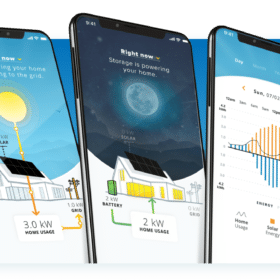
SunPower launches home monitoring app for solar, storage
The SunPower solar monitoring app draws inspiration for its user interface from unlikely non-energy sources such as Spider-Man.
Total and Google Cloud develop tool to predict rooftop PV potential
The Solar Mapper uses artificial intelligence algorithms that compile data extracted from satellite images. It can estimate site solar potential and indicate the most suitable technology.
US corporate solar market reaches 8 GW
The new Solar Means Business report by the Solar Energy Industries Association indicates that low prices and climate change commitments are driving corporate interest in solar and storage. Apple, Amazon and Walmart lead the list of top players.
Google to create easier renewable power purchase pathways
The tech giant has eliminated its entire carbon legacy and is moving toward running entirely on renewables, 24/7. More importantly, it’s looking to create pathways for other renewable purchasers to follow in its wake.

The ‘rubber-band effect’ on renewable energy project margins
David Riester of Lacuna Sustainable Investments, looks at how, on the journey from concept to monetized power plant, renewables and energy storage projects tend to get tugged toward ‘zero’ margin, from either direction. The further the rubber band is stretched, the stronger the pull back toward zero.
