
UK rooftop solar installations surge, new battery storage record set
Latest MCS data for small-scale renewables reveal a strong month for solar installations up to 50 kW, double-digit growth for battery energy storage installations and a milestone reached despite a muted month for heat pump installations.
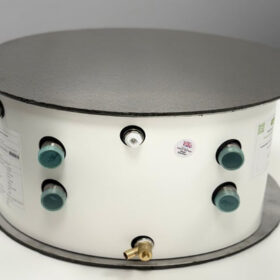
Hewer launches pre-assembled unit for heat pump retrofit, installation
The UK-based heating solutions provider has developed a pre-engineered and ready-to-install unit compatible with most of the residential heat pumps available in the market. It can be placed underneath a standard hot water cylinder and transfer heat from the pump via a plate exchanger to the central heating indirectly.
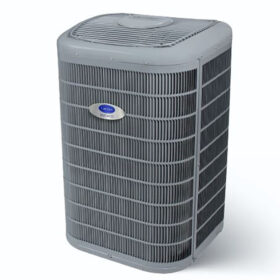
Carrier debuts residential heat pump for cold climates
The U.S. heating specialist said its new heat pump system can operate “reliably” at -30 C and achieve 100% heating capacity at -17 C, with full cooling capacity being achievable at 50 C.

GE Appliances unveils residential hybrid heat pump water heater
The U.S. manufacturer said its new heat pump water heater can provide up to 60% more hot water than standard electric water heaters. The system is available in 240 V and 120 V options and with a capacity ranging from 160 L to 190 L.
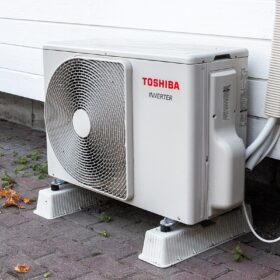
New UK planning rules for heat pumps come into effect, one meter rule scrapped
Change to planning law could simplify heat pump installation process for thousands of households in England. Limits on the size and number of heat pumps that can be installed have also been raised. The changes have been introduced as the UK government pursues 600,000 installations per year by 2028 target.

New control strategy for PV-driven air source heat pumps
Researchers in China have developed a new methodology to improve the performance of solar-powered air source heat pumps. The proposed approach reportedly increases the energy efficiency of optimized building systems by 18%, with solar energy potentially reducing their carbon content by 37.78%.
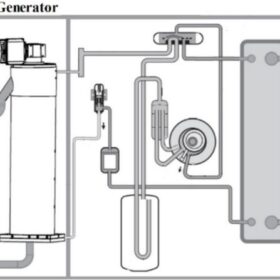
New research shows viability of residential ice-source heat pumps
Scientists in the United Kingdom have demonstrated the feasibility of residential ice-source heat pumps in cold climates and densely populated areas. They designed a heat pump system that utilizes existing gas pipelines to transport water.
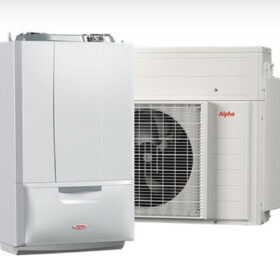
Alpha launches residential heating solution combining heat pump, boiler
The UK-based company said its new hybrid solution includes a stand-alone monobloc air-to-water heat pump with a nominal capacity of up to 16 kW and one of its boiler range. The heat pump system uses R32 (difluoromethane) as a refrigerant and has a coefficient of performance of up to 5.1.
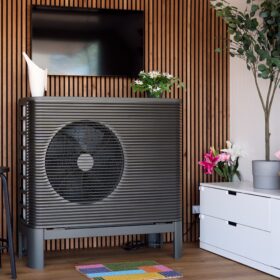
Ikea begins offering air-to-water heat pumps in Germany
The Swedish furniture giant began offering air-to-water heat pumps distributed by Svea Solar and manufactured by Sweden-based Aira.

Electric cars and heat pumps can help avoid 110 hours of negative electricity prices annually
An Enervis study commissioned by Green Planet Energy sees great potential for reducing CO2 emissions and avoiding peak feed-in times in intelligent control, particularly in adapting to available PV power. Not only users of electric cars and heat pumps could benefit from this, but also all other electricity customers – thanks to lower electricity prices.
