Tandem solar modules vs commercial crystalline
Researchers in France have tried to predict the competitiveness of tandem PV modules against commercial crystalline products in 2030. Crystalline products will be 22-24% efficient in a decade, according to the researchers, possibly 25% if interdigitated back-contact heterojunction versions become mainstream. To compete, tandem devices will need to offer similar life spans and degradation rates, plus efficiencies of 30%.
Meyer Burger reveals locations for new cell, module plants in Germany
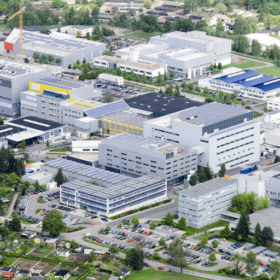
Production of highly efficient solar cells and modules will start at two sites in Germany from the first half of 2021. The Swiss tech group plans to eventually expand annual production to 5 GW.
Sticking together
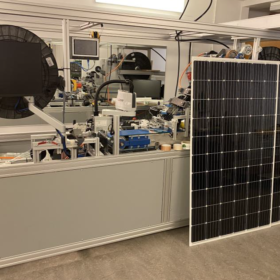
A cell interconnection method developed by a Swedish company promises lower-cost and higher-throughput production of PERC and more advanced silicon PV modules. The process is ready to move to pilot production, and its creators want to play a role in the anticipated European solar manufacturing renaissance.
Chinese PV Industry Brief: Longi to grow by 10 GW, China opens world’s largest floating PV project
Plus, equipment manufacturer Shangji Automation is set to enter the silicon ingot making game with plans for an 8 GW fab, while state-owned developer Panda Green says it plans to add 500 MW of annual project capacity over the next three years.
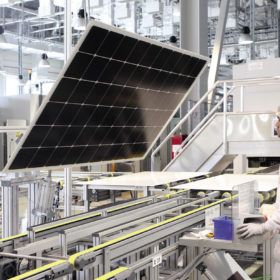
Russian solar manufacturer goes green
Hevel Group has announced it will source all the 65 GWh required annually to run its Novocheboksarsk factory from renewables sources via the wholesale market.
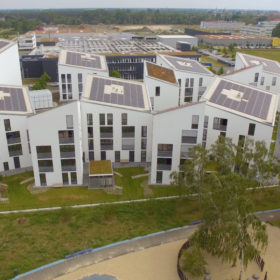
Panasonic unveils first smart city in Berlin
A new project in the German capital combines a range of intelligent energy solutions, including PV systems, storage tanks, and air-to-water heat pumps integrated into an efficient energy management system.
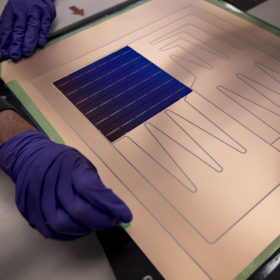
Heterojunction MWT solar module based on 23%-efficient cells
Scientists in the Netherlands have claimed that a heterojunction metal wrap-through solar module they are designing could offer a 4% performance improvement over conventional heterojunction panels.
European consortium bid to bring 25.4%-efficient heterojunction-IBC solar cell into mass production
The EU-funded Nextbase project aims to manufacture heterojunction, interdigitated back-contact solar modules for less than €0.275/W. Solar panels featuring the Nextbase cell tech are expected to have a conversion efficiency of 23.2%, according to the European Commission.
New metallization paste range from Heraeus
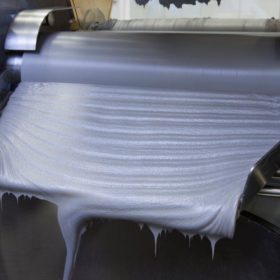
The SOL 7 series comprises five products for Perc, Topcon and heterojunction devices.
Solar parks may have better biodiversity impact than intensive monoculture farming
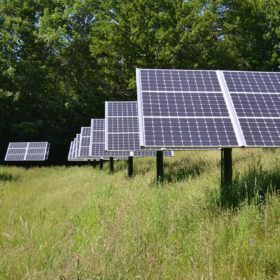
A research project in the Netherlands is seeking to assess the impact of large scale PV projects on soil quality and biodiversity. Principal scientist Wim Sinke, of Dutch research center TNO, says well-designed and operated and maintained solar parks could prove to have better outcomes than monoculture farming.
