
Scaling finance could drive rooftop solar for small, mid-sized enterprises
Rooftop solar growth in India has largely been driven by a few big, creditworthy organizations in the commercial and industrial sector. However, if accessible financing options are made available, growth can also be replicated in micro, small and medium-sized enterprises, according to a new report.
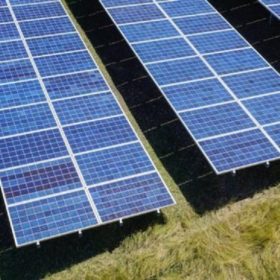
Indian hydropower producer to deploy 1 GW of PV
SJVN, a state-owned hydropower producer in India, has landed one-fifth of 5 GW of grid-connected PV capacity in a recent tender.

Indian PV manufacturer expands panel capacity with new 700 MW factory
Insolation Energy Director Vikas Jain recently spoke to pv magazine about the company’s plans to expand its solar panel manufacturing capacity to 700 MW with the addition of a 500 MW facility. The new factory will be equipped to produce poly, mono, mono PERC, and bifacial panels, with individual outputs of up to 600 Wp.

Impact of increasing PV module prices on Indian market
Modules account for a huge percentage of a project’s total costs, and given that independent power providers have lower margins in the Indian solar energy sector, even a small increase in module pricing can put them under more strain.
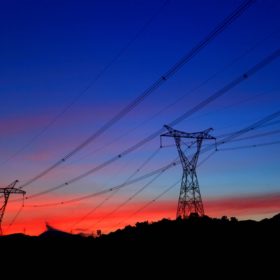
Indian developer brings 250 MW solar park online
ReNew Power has completed a new PV facility in Rajasthan that will sell power to Solar Energy Corp. of India at a tariff of INR 2.55/kWh ($0.035).
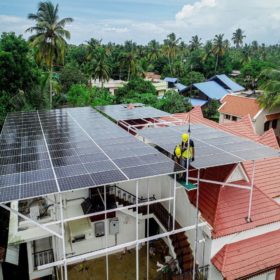
Indian home gets 36.72 kW PV system with 540 W panels
Maxwatt Solar has built a PV system that is purportedly India’s largest residential on-grid residential solar installation, with 540 Wp modules. It uses 68 of JA Solar 540 Wp half-cell mono PERC modules and a 27 kW Fronius inverter.

Indian coal miner seeks equity partners for 4 GW solar fab
Coal India Ltd. is accepting proposals from parties willing to partner on its proposed 4 GW solar PV ingot-wafer-cell-module manufacturing facility. Applications will be accepted until Sept. 16.

Responsible land use for PV, wind could smooth Indian energy transition
India will need large swaths of land for the expansion of renewables capacity over the decades ahead. The energy transition requires planning for proper siting of plants and solutions such as agrivoltaics, distributed energy systems, and offshore wind farms to reduce land-use conflicts.

Tata Power wins 330 MW of solar projects in central Indian state
TP Saurya Ltd., a unit of Tata Power, has secured a letter of award to build 330 MW of PV capacity in the 500 MW Neemuch Solar Park, in the Indian state of Madhya Pradesh.

Indian Railways could power one in four trains with its own solar panels
Feeding solar electricity directly from its own panels into overhead lines, on a fully-electrified rail network, would be more cost-effective for the state-owned company than buying that green power from the grid, according to a new study.
