
European Commission publishes new grid rules and plans to accelerate interconnection projects
The European Union’s executive body sets out plan to more closely link the energy systems of EU member states, including commitment to fast-track key interconnector projects. Proposals have been welcomed by leading solar and energy storage trade bodies. The move comes as several EU nations lag 15% interconnection target set for 2030.

Bringing clean African electrons to Europe
A raft of ambitious interconnection projects has been announced to bring African electrons to European shores. While there are financial and supply chain challenges to overcome, the renewables potential on offer across North Africa is exciting investors.
UK regulator approves five undersea energy links by 2032
The UK electricity regulator has approved five new undersea energy links to connect the United Kingdom with the Netherlands, Belgium, Germany, Ireland, and between Northern Ireland and Scotland by 2032. Three will serve as traditional interconnectors, while two will also transmit power from offshore wind farms.

UK regulator approves 2 GW subsea cable connecting renewable energy hubs
Ofgem has approved costs on the largest investment in British transmission infrastructure on record. The subsea cable connecting northeastern Scotland and northeastern England is expected to ease network congestion and facilitate the rollout of renewables.
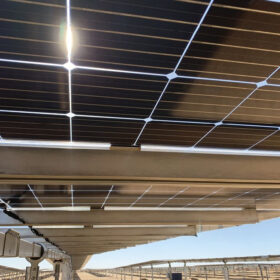
Egyptian solar set to expand beyond the massive 1.8 GW Benban PV project
In this edition of the Weekend Read, we turn to Egypt. The gigawatt-scale Benban project showcases the North African country’s solar potential, and premium prices for gas exports make the case for a more diverse energy mix. A nation with grand renewables targets – but slow installation rates – may finally be weaning itself off fossil fuel resources.
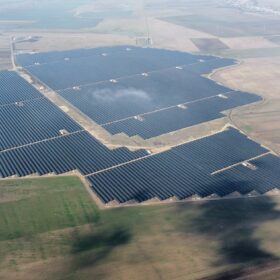
Navigating Romania’s PV boom
A latecomer to the European PV party, Romania’s embrace of clean energy means it is perfectly placed to ride the wave of urgently ramped grid investment being rolled out by the European Union.
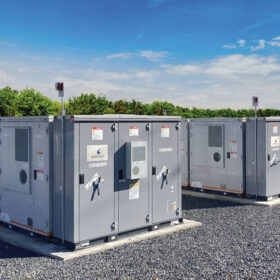
Weekend read: Pathfinders for grid stability
Non-synchronous renewable energy affects grid stability but storage-as-transmission (SAT) assets offer grid companies a trump card. Whether it’s “virtual transmission” in Australia, Germany’s “Grid Booster” program, or the giga-scale pipeline of projects emerging in the United Kingdom, energy storage is finding a way.

Solar auctions to replace feed-in tariffs in Kenya
Attendees at the Renpower Kenya clean energy event in Nairobi were told there will be a changeover in incentive schemes in 2022 with mature technologies no longer benefiting from fixed payments.
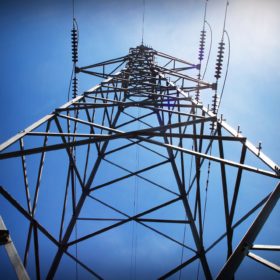
UK considers reform of renewables subsidy regimes
A conference about the UK’s electricity market showed organizations are considering the future of the country’s energy sector and how to achieve a net zero economy.
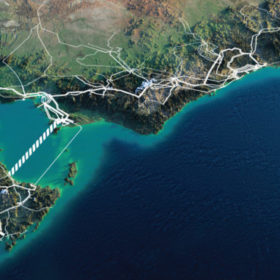
Undersea electricity interconnector to connect Australia with Tasmania
The developers of the proposed 1.5GW Marinus Link transmission project, which would link Tasmania and the Australian mainland via an undersea electricity interconnector, have launched a new engineering survey to identify the most suitable corridor for the cables.
