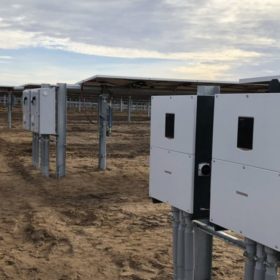
Sungrow makes further inroads in US market with bankability rating
At the recent Solar Power International trade show in Salt Lake City, Utah, part of the larger North America Smart Energy Week, pv magazine met with Hank Wang, President of the Americas Region at the Chinese inverter manufacturer Sungrow. The company expects to ship 2 GW of products to North American markets this year with utility-scale products making up the bulk of these shipments.
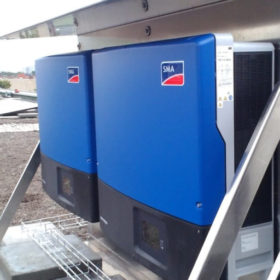
SMA: Sustainability and profitability are not mutually exclusive
In the run up to our Greenwashing vs. verifiable sustainability webinar, the CEO of pv magazine’s UP initiative partner SMA Solar Technology, Jürgen Reinert, talks about what the inverter manufacturer is doing to prove its sustainability credentials.
Bill for replacement inverters and other solar maintenance could hit $9.4bn by 2024
This year will see strong growth for the global PV market, to 114 GW, and that pattern will continue in the years ahead, according to analyst Wood Mackenzie. a report has highlighted soaring inverter replacement costs for PV project owners as a side-effect of the solar success story.

Solaredge launches smart modules with integrated power optimizer in Europe
For its new offer, the Israeli inverter maker is using modules provided by a Tier 1 manufacturer. The products have a 12-year warranty and 25-year performance guarantee.
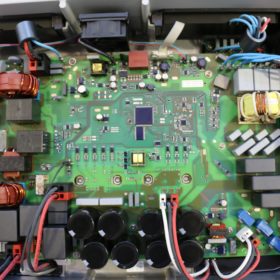
The weekend read: Inverter issues
PVEL’s inaugural inverter scorecard is showing up the need for much more scrutiny on the reliability of inverters. But are developers and EPCs even paying attention?
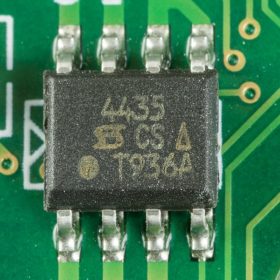
Swiss scientists identify causes of defects in silicon carbides for power electronics
Carbon clusters of a few nanometers in size could be responsible for the defects affecting the thermal stability of SiCs. The defective carbon accumulations arise during the oxidation of silicon carbide to silicon dioxide under high temperatures.

Solar world pays tribute to founding father of SolarEdge
A tribute to Guy Sella has hailed ‘a brilliant man’ and ‘a revolutionary trailblazer’ who was ‘vibrant and energetic’ yet ‘down-to-earth and approachable’.
Dear European solar industry: Let’s lead the interconnected platform before it is too late
While China is single-handedly reducing CAPEX for modules and inverters, Europe understands that hardware won’t be the holy grail – generally speaking. But what is? Perhaps it is time for a new strategy to surf in front of the digital wave.
SolarEdge posts strong revenue increase, slight drop in net profit
The Israeli inverter manufacturer saw its net profit decline 4% year-on-year to $33.1 million in the second quarter, despite shipping 1.3 GW and seeing a 43% increase in turnover. Gross margins were affected by the increase in U.S. tariffs on China made products.
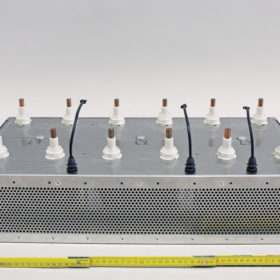
The weekend read: Transistor transition
In pursuit of a lower levelized cost of energy for the next generation of inverters, some manufacturers have turned to acquiring considerably more expensive semiconductors. While this may sound like a misstep at first, the trick could be pulled off — though not easily, and not always — yet.
