UV testing, solar cell factory inspection now mandatory for Munich Re’s PV warranty insurance
The world’s largest reinsurer has recently introduced stricter requirements for PV warranty insurance to further de-risk insured PV parks and set a higher benchmark for industry wide reliability and production quality.
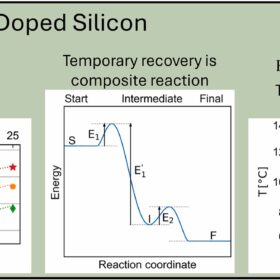
New model for LeTID prediction in gallium doped silicon wafers
Researchers at Fraunhofer Institute for Solar Energy Systems in Germany developed a predictive model for light and elevated temperature induced degradation in gallium-doped silicon wafer that includes the effects of temporary recovery.

Impact of hydrogen on silicon solar cell degradation
German researchers have reviewed recent studies on hydrogen-related degradation in silicon solar cells. They said the work is timely, with n-type silicon dominating production and antimony-doping emerging.
LeTID minimal issue for gallium-doped Czochralski silicon PERC products
Scientists from Trina Solar, Longi, Fraunhofer ISE, and other entities have looked at light and elevated temperature-induced degradation (LeTID) in gallium-doped Czochralski silicon (Cz-Si:Ga) PERC cells. They have found little relevant degradation.
Weekend Read: Getting to the bottom of TOPCon degradation
Should the industry be alarmed at the potential degradation susceptibility of tunnel oxide passivated contact (TOPCon) solar cells? Or are the problems easily addressed and more a reflection of rushed-to-market products? pv magazine contributor and consultant Götz Fischbeck reports.
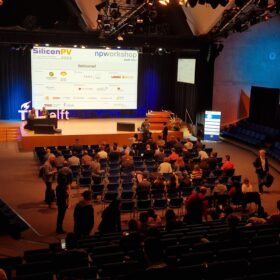
Key takeways from SiliconPV 2023
The annual SiliconPV Conference came to TU Delft in the Netherlands last week and offered an important health check for the science and technology behind solar energy. pv magazine was on site to hear the latest from researchers reaching for higher efficiency through tandem cells and other innovations, and working to cut down solar technology’s consumption of rare and expensive materials.
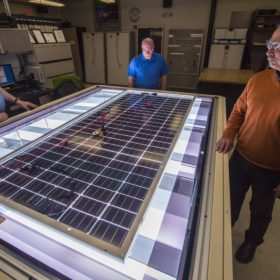
Monitoring degradation for 13 module types
In a study that began in 2016, US scientists purchased 834 PV modules, representing seven manufacturers and 13 module types, and installed them in various climate conditions to observe their performance over time. The results show that, while plenty of opportunities still exist to extend module lifetimes and reduce performance loss in the field, reductions in the manufacturing cost of PV have not come with an increase in their degradation rate.
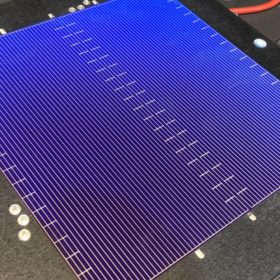
Gallium doping and solar cell degradation
German scientists have conducted a series of experiments on gallium-doped silicon solar cells to understand the causes of degradation in PV cells and modules treated with gallium rather than boron. They confirmed that the performance losses are caused by a bulk defect in the material, and found that the right combination of light and temperature can “heal” earlier damage and even lead to small improvements in overall cell efficiency.
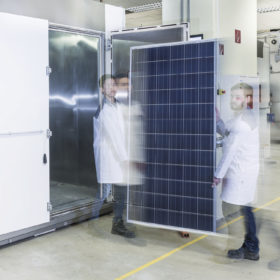
The struggle against LeTID continues
Researchers in Australia have conducted extensive research on all possible causes behind the light-elevated temperature-induced degradation (LeTID) in solar panels and presented a few mitigation strategies put in place by manufacturers to reduce its effects.
Understanding perovskite degradation
Scientists in the US took a closer look at the mechanisms causing perovskites to degrade under light and raised temperatures. By testing perovskite cells with various additives and other recipe tweaks, the group was able to identify pathways to improving long-term stability.
