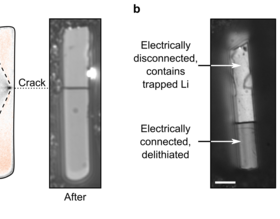
Optical microscopy technique to study prevention of battery failure
Researchers at the University of Cambridge have examined one of the fastest-charging anode materials by using a low-cost, lab-based optical microscopy technique. Their findings showed that particle fracture, which can reduce the storage capacity of a battery, is more common with higher rates of delithiation and in longer particles.
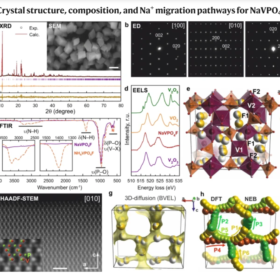
High-voltage sodium-ion batteries with up to 15% higher energy density
Researchers in Russia have developed a new sodium-vanadium phosphate fluoride powder. It has a particular crystal structure that provides superior energy storage capacity in the battery cathode.

Powin to supply 5.8GWh of batteries for projects in US and Taiwan
The U.S. battery specialist has signed framework agreements with four developers to deliver systems for multiple projects.

Toshiba launches 20Ah rechargeable lithium-ion battery
Toshiba has developed a battery that can be used with PV modules, with a design that charges and discharges at high currents. The new 20Ah-HP SCiB product has a rated capacity of 20Ah, a nominal voltage of 2.3V, and an input power of 1,900W. It measures 116 mm x 22 mm x 106 mm and weighs 545 grams.
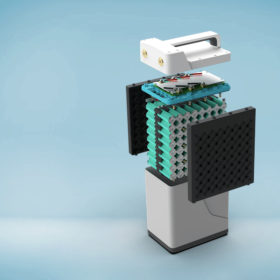
UK business claims to offer ‘world’s most sustainable lithium-ion battery’
English manufacturer Aceleron claims every component of its devices can be accessed for replacement, repair or recycling, with the business’ co-founder stating the aim is to ensure ‘100% of the materials in our batteries will continue to be used for as long as possible – preferably forever.’

Panasonic launches new Evervolt battery
Panasonic said the system is available in the U.S. with storage capacities of 17.1 kWh and 25.65 kWh. The product comes with a floor-standing battery cabinet and a hybrid smart inverter with 4 MPPTs.

Soluna unveils 20kWh battery for residential and commercial applications
The Chinese manufacturer says the battery has a depth of discharge of 95%. It will be available for sale starting from Q1 2022.
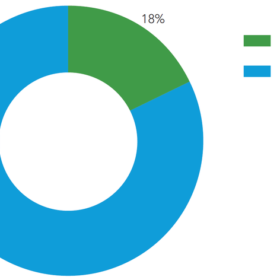
‘The chance to reset with a green recovery has now been lost’
Norwegian consultancy DNV today published the latest of its annual surveys of the state of the energy transition and lamented the fact so very little has been achieved during the last five years. We are forging ahead into a world that will be 2.3C hotter this century, predicts the report.
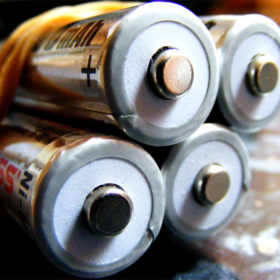
Battery costs have fallen 97% since 1991, claim MIT researchers
Academics reviewed the historic price development of lithium-ion batteries and found the accepted model does not accurately reflect the full cost decline and technological improvement which has taken place. With more data points to compare, the team found batteries had improved even more than previously assumed.

Plans for 50,000 hydrogen-powered taxis in Paris
European electric transmission company body ENTSO-E has unveiled details of a project to install 11 GWh of electrolyzed hydrogen storage capacity across ten locations around the French capital by the end of the decade.
