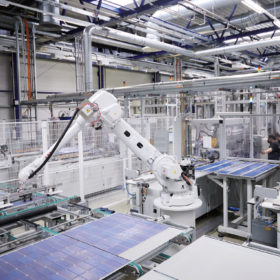
Meyer Burger prepares to shut down plant in Germany
Swiss solar panel maker Meyer Burger will seek shareholder approval for a rights issue of as much as CHF 250 million ($284 million) to finance the completion of its US manufacturing facilities in Colorado and Arizona.
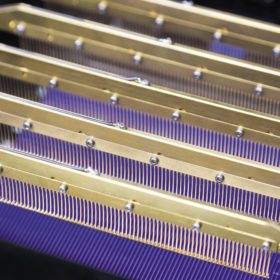
Weekend Read: Connecting HJT
The application of busbarless cell interconnection approaches could unlock the potential of heterojunction (HJT) technology, primarily by reducing the historically high silver usage of negatively-doped, “n-type” cell technology. As HJT manufacturing increases, a wave of applications may very well be on the horizon.
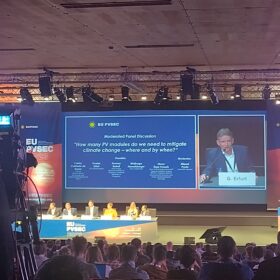
While solar is thriving, European manufacturers are concerned they won’t be able to survive without protective measures
The current module oversupply market dynamic has coincided with efforts to bolster manufacturing outside of China by national governments and manufacturers alike. pv magazine consultant and contributor Götz Fischbeck was a part of discussions regarding made-in-Europe production, to find that protectionist measures are being called for by some.
EUPVSEC: Cautious optimism over local production
As the 40th edition of the European Photovoltaic Solar Energy Conference and Exhibition (EUPVSEC) gets underway in Lisbon today, it’s clear that European PV manufacturing faces some difficult challenges in the current climate of low prices and strong competition on all sides. Nonetheless, the show is already revealing plenty of optimism among the continent’s PV manufacturing players.
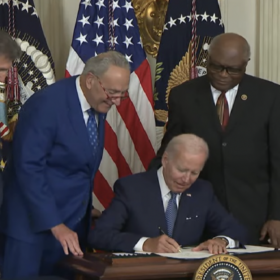
One year on, IRA kicks off US energy renaissance
The passage of the US Inflation Reduction Act has brought forth a range of benefits, including the decarbonization of the US grid, but challenges remain.
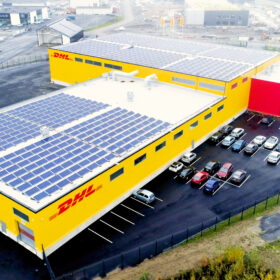
Is the EU doing enough to establish a solar manufacturing supply chain?
Compared to the Inflation Reduction Act (IRA) signed by Joe Biden’s administration in the US, the EU’s approach to establishing solar manufacturing appears slow and lacking in clarity. In this blog post, I will explore the EU’s renewable energy policy, specifically its emphasis on solar manufacturing, and evaluate whether Brussels is doing enough to establish a European solar supply chain.
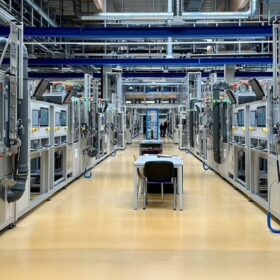
Meyer Burger builds 2 GW solar cell factory in US
Meyer Burger plans to start a 2 GW cell factory in Colorado in the fourth quarter of this year.
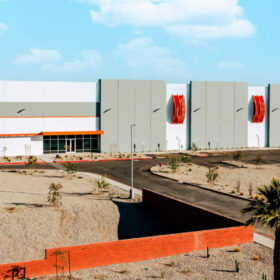
Ikea bets on Meyer Burger’s heterojunction solar modules
Between 2025 and 2029, the investment company of the Swedish furniture group will purchase solar modules produced in the US by the Swiss photovoltaic manufacturer. The agreement is the basis for Meyer Burger to increase annual production capacity at its Arizona site to around 2 GW.
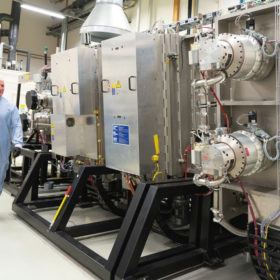
Weekend Read: Industry and researchers in tandem
As efficiency records tumble and devices become more stable, Europe is seeing the beginnings of a race to commercialize high-efficiency perovskite-silicon tandem solar products, reports Valerie Thompson.
Meyer Burger aiming for EU funding to hit gigawatt scale
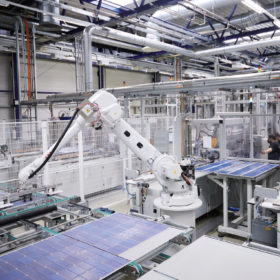
Swiss PV manufacturer Meyer Burger hit its 321 MW production volume target last year, and its expansion into the gigawatt scale is already underway, as it recently completed two additional purchase agreements with major customers. It has also applied for hundreds of millions of funding support from the EU Innovation Fund, with a final decision to be made in the summer.
