
India extends solar manufacturing mandate to wafers and ingots
India’s Ministry of New and Renewable Energy (MNRE) has expanded its Approved List of Models and Manufacturers (ALMM) framework to include solar ingots and wafers, with mandatory compliance for new project bids taking effect from June 1, 2028.
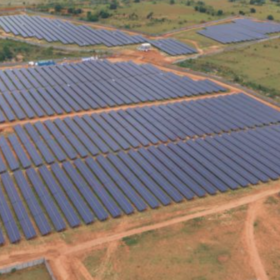
Open access solar set to drive next phase of India’s C&I growth
As India’s renewable ecosystem matures, open access solar is set to become a cornerstone of corporate energy strategy – delivering both cost savings and sustainability gains. Policy clarity, stronger transmission infrastructure, and incentives for storage integration will be key to unlocking the next phase of growth.

Eastman launches 800 MW solar module plant in India
Eastman Auto & Power has started production at an 800 MW solar panel factory in the Indian state of Haryana.

Indian renewables gain 8.6 GW of relief after court delays on bird protections
India Ratings and Research said India’s Ministry of New and Renewable Energy (MNRE) will treat commissioning delays linked to Supreme Court proceedings over the Great Indian Bustard as a force majeure-like event, easing liquidated-damages risk for about 8.6 GW of renewable projects.

India’s blueprint for sustainable solar success
By embedding quality benchmarks into procurement and manufacturing incentives, policymakers are ensuring that India’s energy transition is durable, not disposable. The focus has moved from rapid installation to long-term reliability — a sign of sectoral maturity.
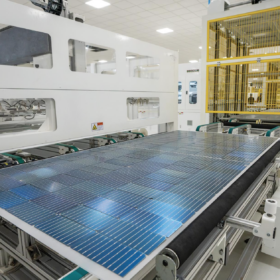
India’s GREW Solar secures 3 GW ALMM approval
India’s Ministry of New and Renewable Energy (MNRE) has approved 3 GW of GREW Solar’s G12R module manufacturing capacity under the Approved List of Models and Manufacturers (ALMM), enabling deployment in government-backed projects and supporting the company’s planned expansion to 11 GW by 2026.
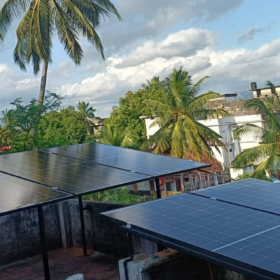
India installs more than 2.08 million rooftop solar systems under PM scheme
India has installed more than 2.08 million rooftop solar systems under the PM Surya Ghar: Muft Bijli Yojana program since early 2024, with INR 147.7 billion ($1.6 billion) disbursed in central subsidies, according to the Ministry of New and Renewable Energy (MNRE).

India renewables seek policy clarity, storage incentives in Union Budget 2026
India’s renewable energy industry is urging the government to use Union Budget 2026 to unlock stalled projects, lower financing costs, and accelerate domestic manufacturing across solar, storage, and grid infrastructure.

Stäubli invests $10 million to expand PV connector manufacturing in India
Swiss connector manufacturer Stäubli invested $10 million to expand its manufacturing facility in Bengaluru to increase production of PV connectors for domestic and global solar markets.
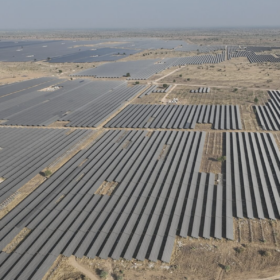
India’s 2025 renewable energy sector review: capacity growth and constraints
India added more than 40 GW of solar and wind capacity in 2025, while grid constraints, power contracting delays, and supply chain risks continued to affect project execution.
