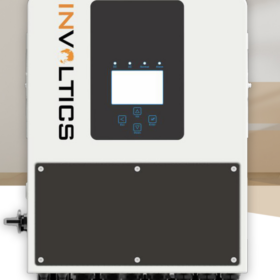
Involtics unveils GTSI single-phase hybrid inverter for homes
India-based Involtics has launched its GTSI series of single-phase hybrid inverters in 3 kW, 3.6 kW, 5 kW and 6 kW sizes for residential solar systems.
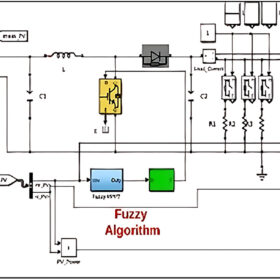
Optimizing PV system tilt angle, MPPT using fuzzy logic controller
Researchers in the Middle East have developed a fuzzy logic controller that simultaneously optimizes the tilt angle of PV systems and performs maximum power point tracking (MPPT). Year-long simulations indicate that the proposed approach increases power generation by approximately 20%.

Novel MPPT methodology uses grey wolf hunting as inspiration
Researchers have developed a maximum power point tracking algorithm based on the social hierarchy and hunting strategy of grey wolves. When tested under realistic shading conditions, the grey wolf optimizer achieved an average MPPT efficiency of 98.15%, significantly outperforming conventional MPPT methods.

Novel MPPT method combines APO, model-predictive control
An international research team has tested a hybrid control technique combining adapted perturb and observe (APO) with model-predictive control to address complex partial shading in solar arrays. The method, validated through simulation and physical experiments, reportedly outperforms existing approaches.

Novel MPPT technique uses fuzzy logic control with new inputs
Academics have developed a maximum power point tracking (MPPT) algorithm for PV systems that combines incremental conductance with fuzzy logic control. The inputs used are the sum of conductance and incremental conductance and its rate of change. It had an average efficiency of 97.7%.

Hoarfrost-inspired technique to improve MPPT in PV systems under partial shading
Scientists in China have introduced developments to the RIME optimization method, which takes inspiration from the developmental course of hoarfrost in nature. They have compared it to other MPPT algorithms and found it to be faster and to improve power output.

Novel MPPT tech based on salp swarm, hill climbing algorithms
Researchers have suggested to use a hybrid version of the so-called salp swarm algorithm (SSA) algorithm for maximum power point tracking in PV systems operating under highly fluctuating environmental conditions. The novel method also integrates the hill climbing algorithm, which simulates the process of climbing a mountain and reportedly helps find the best possible solution to a given problem.

Survey shows best fast MPPT techniques for PV
A group of scientists conducted a literature review of almost a hundred fast maximum power point tracking algorithms. They extracted ten representative algorithms and showed which of them works best under different scenarios.
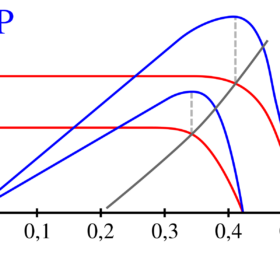
New MPPT technique based on improved snake algorithm
Researchers from China have suggested to use the so-called improved snake optimizer (ISO) algorithm for maximum power point tracking in PV systems. The proposed algorithm can reportedly achieve a higher PV system performance and better accuracy than the simple snake algorithm.

Weekend Read: Gray skies over Californian solar
There may be a global solar boom but a drastic revision of California’s net metering program has ruptured the industry overnight and is affecting everyone from installers to financiers to makers of power electronics.
