
U.S. court upholds California’s current net billing mechanism, dealing blow to rooftop solar
California appellate court has affirmed the Public Utilities Commission decision to sharply cut compensation for homeowners and businesses that export rooftop solar electricity production to the grid.
Pakistan blocks retroactive export rate cut in net billing shift
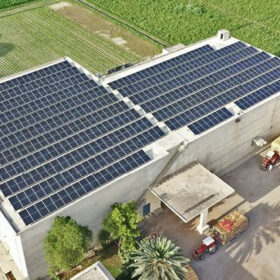
Late amendment put forward to halt sudden retroactive change to export rates for net metering contract holders in Pakistan. It follows strong criticism from local solar industry leaders over sudden change in export rates under new net billing structure.

Morocco sets net‑metering tariffs for high, medium‑voltage systems
The Moroccan authorities have established new net‑metering tariffs for high, medium, and extra-high voltage systems from March 1, 2026, to February 28, 2027. The low-voltage tariff for residential PV will be set later, as the current regime mainly applies to industrial and commercial solar plants.

Malaysia launches new net metering scheme for rooftop PV
Effective since January 1, 2026, the Solar Accelerated Transition Action Programme (Solar ATAP) aims to build on Malaysia’s previous net metering program’s efforts to maximize the use of rooftops for solar generation by incentivizing consumers to export excess generation to the grid. The capacity limit has been set at 100% of the consumer’s maximum demand, or 1 MW.

Cyprus to replace net metering with new self-consumption regime
Cyprus will replace its current net metering and billing schemes with a new, market-based self-consumption model from January 2026, as the island’s electricity sector opens to competition.

Malaysian utility launches rebate program for residential PV
Sarawak Energy says it will grant rebates of up to $2,800 for PV systems planned to operate under Malaysia’s net metering scheme.

Philippines to streamline net metering applications
Government agencies and utilities in the Philippines have agreed to reduce the red tape involved in applying to the country’s net metering program. As of May this year, there were more than 17,000 end-users registered under the program with an aggregate installed capacity of 157 MW.
C&I segment driving Turkey’s new solar boom
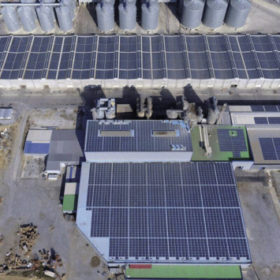
Turkey has installed about 7.6 GW of new solar capacity over the past year, driven largely by rising electricity prices and expanding uptake of net metering by commercial and industrial (C&I) consumers, Solar3GW President Yusuf Bahadir Turhan tells pv magazine.

Malaysia upgrades net metering scheme for rooftop PV
The Malaysian authorities say that approximately 1.7 GW of PV systems are operating under the Malaysian Building Integrated Photovoltaic (MBIPV) scheme and the country’s three Net Energy Metering (NEM) programs.
Pakistan proposes 18% tax on foreign panels in wake of solar imports surge
The Pakistan government has proposed an 18% general sales tax on imported solar panels in its budget for the new 2025-26 financial year. Pakistan Solar Association has warned the tax risks slowing solar adoption in the country.
