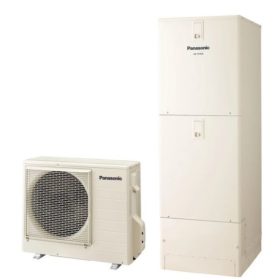
Panasonic launches solar heat pump solution for water heating
Panasonic has unveiled a new product in Japan with a PV-based charging function that uses a heat pump and hot water storage unit to save energy by maintaining bathwater temperatures at constant levels.
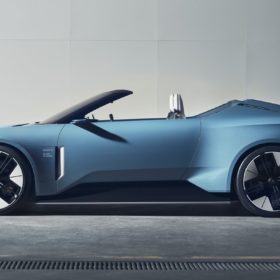
The mobility rEVolution: An electric car integrating an autonomous cinematic drone
Developed by Swedish manufacturer Polestar, the hard-top convertible incorporates a drone that can be launched from its dock behind the rear seats whilst driving to capture footage of the journey. In other news, Sony and Honda tie-up to make electric vehicles, Ford splits gas-powered and EV businesses, Stellantis unveils a strategic plan to reach net-zero by 2038, and Tesla offers free supercharging near Ukraine. Panasonic has also unveiled plans for two new production facilities for its large-format cylindrical battery cells.
Industry heavyweights look to solid-state battery cells, resources, and recycling
Mercedes-Benz has teamed up with ProLogium to integrate solid-state battery technology into a range of passenger vehicles; Panasonic and Toyota have launched an industrial-academic collaborative research program concerned with battery resources and recycling; and LG Energy Solution plans to spend $2.1 billion with General Motors to build another electric vehicle battery plant in the U.S.
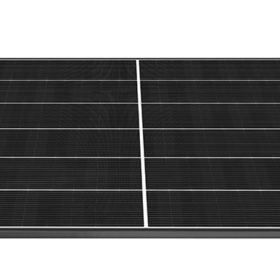
Panasonic unveils 410 W solar panel with 22.2% efficiency
The new heterojunction module series is compatible with Panasonic’s Evervolt battery and has a power output ranging from 400 to 410 W. It also features a temperature coefficient of -0.26% per degree Celsius.
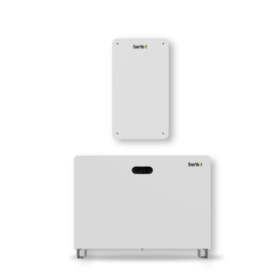
Panasonic launches new Evervolt battery
Panasonic said the system is available in the U.S. with storage capacities of 17.1 kWh and 25.65 kWh. The product comes with a floor-standing battery cabinet and a hybrid smart inverter with 4 MPPTs.

New York to sell PV equipment it bought for Tesla, Panasonic
The state of New York will sell more than $200 million in equipment as Tesla plans to ramp up and expand operations at a manufacturing facility in Buffalo.
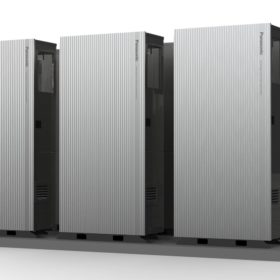
Panasonic launches 5 kW fuel cell system for commercial applications
The system has dimensions of 834×417×1,766 mm and weighs 205 kg including the design panel. It achieves an electrical efficiency of 56% and can be connected with a hot water storage unit.
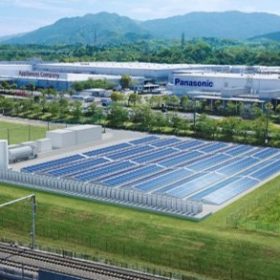
Panasonic combines hydrogen fuel cell generators with PV and storage
The pilot project is combining hydrogen fuel cell generators with a combined capacity of 500 kW with a 570 kW solar array and 1.1 MWh of lithium-ion batteries. It is planned to come online in the spring of 2022.
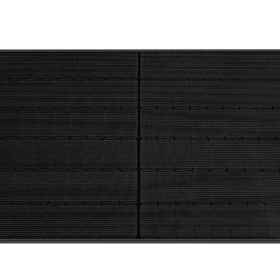
Panasonic launches 380 W heterojunction solar module compatible with its Evervolt battery
The new module series has a power output ranging from 370 to 380 W, a temperature coefficient of -0.26% per degree Celsius, and an efficiency of up to 21.7%.

Panasonic to exit solar manufacturing
The Japanese brand will continue to sell third-party-made modules under its brand in its home market, as it already does overseas, but in-house PV wafer, cell and module production will halt by the end of fiscal year 2022.
