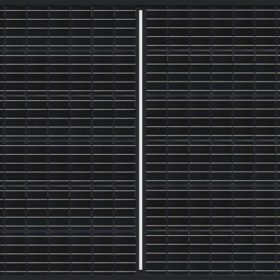
Sharp unveils black, half-cut-cell module
The solar panel will be part of the half-cut-cell series recently launched by the Japanese manufacturer and the company claims it is ideal for rooftop PV projects with aesthetic requirements. The 19.0%-efficient product has a power output of 320 W.

Talesun to bet big on advanced technologies
Chinese solar manufacturer Talesun has announced plans to raise up to $226 million to expand PV cell and module production capacity by up to 2 GW, with a focus on heterojunction and TOPCon technologies.
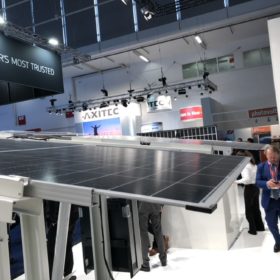
Trina announces 23.39% efficient, commercially produced PERC cell
The Chinese manufacturer believes it has set a record because its device was manufactured on standard commercial production equipment.
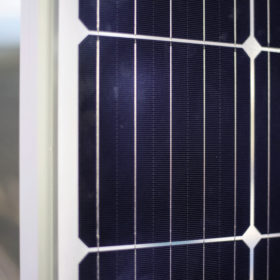
Preventing LID in a 23.83% efficient Longi PERC cell
Australian researchers have unveiled hydrogenation technology to reduce light and elevated temperature-induced degradation in Czochralski silicon PERC solar cells. The developers say the process can minimize degradation without sacrificing performance in cells and modules.
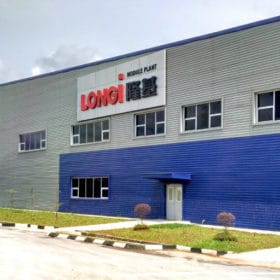
Longi claims 22.38% efficiency world record for PERC mono panel
The Chinese manufacturer said the result was confirmed by Germany’s TÜV Rheinland. The achievement beats the company’s previous record of 21.65%, set last month.
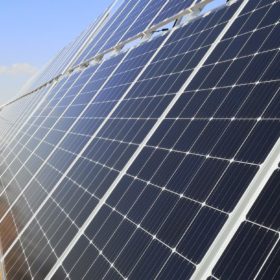
Jolywood says 105 MW Oman project demonstrates value of n-type
As it moves towards grid connection this month, the solar project in the south of Oman demonstrates the value proposition of n-type PV cell technology, Chinese solar manufacturer Jolywood has argued at the World Future Energy Summit. The project is said to be the largest n-type bifacial array in the world.
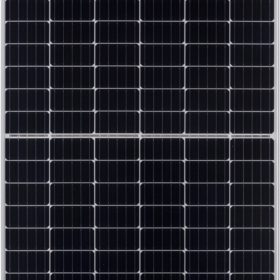
Half-cut modules from Sharp
The Japanese electronics giant has unveiled three monocrystalline half-cut cell modules said to provide 2-3% better performance than standard, full cell panels. The claimed efficiency of the modules exceeds 19.5% and Sharp says power output ranges from 330-395 W.
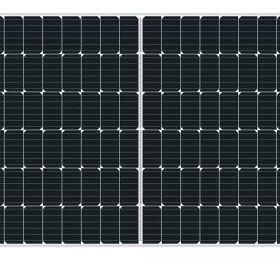
DMEGC launches half cut monocrystalline module with 440 W output
The new 24.5kg, PERC monocrystalline product from DMEGC is said to have an efficiency of 19.78%. The panels are available in glass and white-backsheet formats.
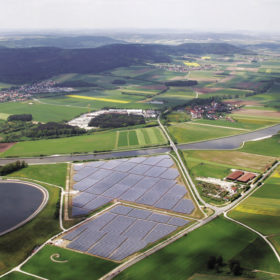
SunPower splits in two
The U.S. company’s transformation from solar manufacturer to the second-largest residential PV company in the nation is complete after it spun off its high-efficiency cell and module production unit into a new entity, in partnership with Chinese wafer maker TZS.
Longi demonstrates 20% bifacial boost
In a white paper published this week, Chinese module maker Longi Solar shares six months of data from a testing site in India that was built in cooperation with German testing institute TÜV Rheinland. The results show energy yield gains of around 20% for both bifacial mono PERC and n-type modules.
