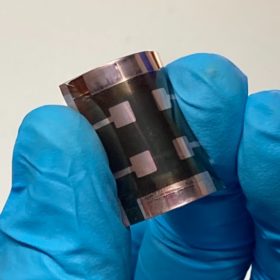
Flexible all-perovskite tandem solar cell with 23.8% efficiency, improved voltage
A Chinese-Swiss research group claims to have overcome two major challenges for the development of flexible all-perovskite tandem solar cells – voltage losses and the deposition process for the cell’s functional layers. They built a device with a high open-circuit voltage of 2.1 V.
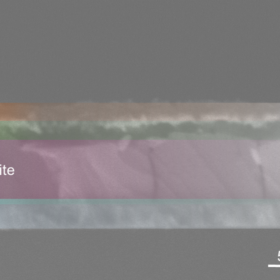
Perovskite solar cell with copper electrode hits 20.1% efficiency
Chinese researchers have developed a new solar cell with a planar n-i-p structure and an indium tin oxide (ITO) substrate. It also has a tin(IV) oxide (SnO2) buffer layer, a perovskite layer, a hole transport layer (HTL), and a layer made of copper. It was able to retain around 92% of its initial efficiency after 1,000 hours.
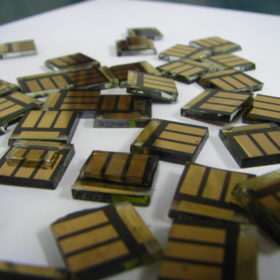
Reliance New Energy invests in US perovskite solar startup Caelux
The new energy unit of Reliance Industries has signed an agreement to acquire a 20% stake in California-based perovskite solar startup Caelux for $12 million.
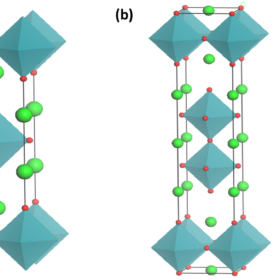
Prospects for Ruddlesden–Popper perovskite solar cells
A research group in the Netherlands has analyzed different manufacturing techniques for two-dimensional Ruddlesden–Popper perovskite solar cells. These cells offer improved photostability and environmental stability compared with their three-dimensional counterparts.
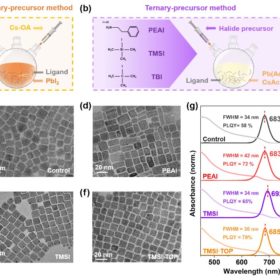
Perovskite quantum dot solar cell with 16.25% efficiency
Chinese researchers have built a perovskite quantum dot solar cell that is reportedly able to reduce trap-assisted charge carrier recombination. The device has an open-circuit voltage of 1.23 V, a short-circuit current density of 17.73 mA cm−2, and a fill factor of 0.745.
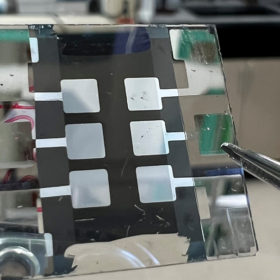
Perovskite solar cell achieves 24% efficiency, retains 87% of output after 100 days
Researchers at the US National Renewable Energy Laboratory claim to have achieved a breakthrough for high-efficiency perovskite solar cells.
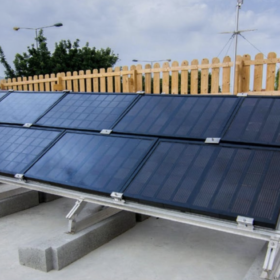
Lab-made perovskite solar panel loses 25% of efficiency over 9-month period
Researchers have studied a perovskite solar panel array with little generation loss due to high temperatures, and better performance than expected.
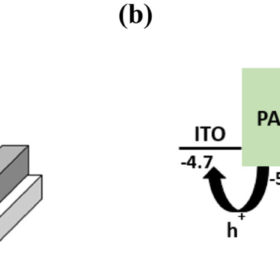
Inverted perovskite solar cell with 16.94% efficiency
A US-Chinese research group has built a perovskite solar cell with a hole-transporting material (HTM) based on conducting polyaniline (PANI) polymer. The device showed significantly higher efficiency than a reference solar cell relying on an HTM made of commonly used PEDOT:PSS.

Perovskite solar cell defect characterization during manufacture for improved stability
A novel electrochemical robotic arm is under development at the University of Arizona to identify perovskite defects during manufacturing rather than after to improve durability.
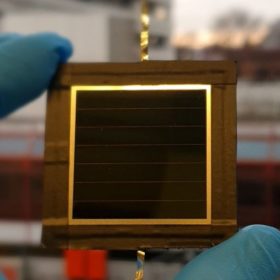
All-perovskite tandem solar panel with 19.1% efficiency
German scientists have developed a two-terminal, all-perovskite solar panel with laser scribing and module interconnections. It has a fill factor of 75%.
