
Perovskite-silicon tandem cell achieves 28.9% efficiency via high bandgap top perovskite cell
A group of international researchers has developed a new perovskite-silicon solar cell design using a top perovskite PV device with an energy bandgap of 1.67 eV and a new self-assembly monolayer based on carbazole. The tandem cell achieved a higher efficiency compared to counterparts without the monolayer and passed the IEC 61215 standard thermal cycling test.
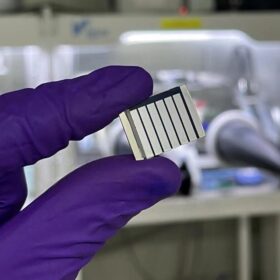
Chinese institute unveils 26.1%-efficient perovskite PV cell with new additive
The Chinese Academy of Sciences has unveiled a high-efficiency perovskite solar cell with a purported peak efficiency rating of 26.1%, by using 1-(Phenylsulfonyl)pyrrole (PSP) as an additive. The cell is third-party certified with an efficiency of 25.2%, and it maintains 92% of its original efficiency after 2,500 hours of operation.
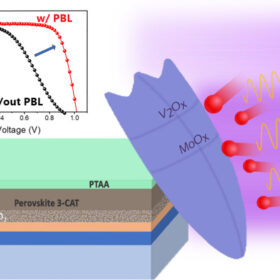
Perovskite solar dell with TMO Buffer Layers hits 15.7% efficiency
Researchers in Italy have used protective buffer layers in perovskite solar cells to mitigate damage during the sputtering of indium tin oxide in the production process. They claim the buffer layers were able to fulfill this mission without impairing the cell’s average visible transmittance.
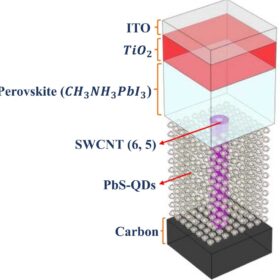
Perovskite PV cell hits 19.9% efficiency with single-walled carbon nanotube
Iranian researchers have improved perovskite solar cell efficiency by using a single-walled carbon nanotube as a hole transport layer surrounded by lead sulfide colloidal quantum dots.
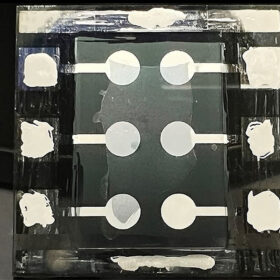
Hong Kong researchers develop inverted perovskite solar cell with 25.6% efficiency
The research team said the cell also achieved remarkable thermal stability, as it was able to retain 90% of its original efficiency for over 1,000 h. The device uses a self-assembled monolayer to stabilize the interface between the perovskite absorber and the hole transport layer.

4JET unveils laser system for P1, P2, P3 scribing of perovskte, CdTe, CIGS solar modules
German equipment supplier 4JET has launched a new thin film system designed for P1, P2 and P3 laser scribing of perovskite, cadmium telluride (CdTe), and copper indium gallium selenide (CIGS) solar technologies.

Perovskite-silicon tandem tech from Oxford PV tested in solar race car
A team of Dutch university students under the banner Top Dutch Solar Racing has installed perovskite silicon tandem cells in its entry in the 16th edition of Bridgestone World Solar Challenge. The upcoming race is a six day, 3000 km expedition across the Australian continent, from Darwin to Adelaide.
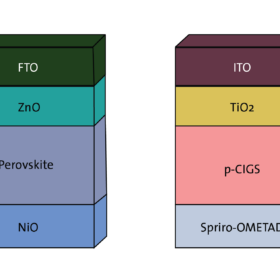
Novel perovskite/CIGS tandem PV cell design promises 38.39% efficiency
A research team in Bangladesh has simulated a perovskite-CIGS PV device that can reportedly achieve a remarkable tandem cell voltage of 2.48 V. The proposed method is also applicable for tandem cells composed of other materials.
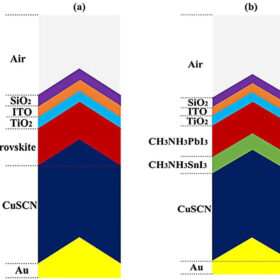
New perovskite solar cell design with silicon dioxide anti-reflector layer
Researchers in Iran have designed a new light trapping (LT) structure for perovskite solar cells that reportedly achieves optimal light absorption without impacting the electrical properties of the cells. The key element of the device is an anti-reflector layer based on silicon dioxide (SiO2) that improves light harvesting and charge extraction performance.
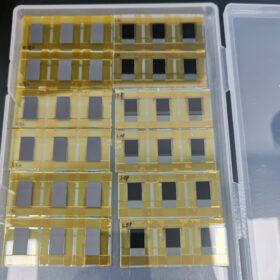
Printable mesoscopic carbon perovskite solar cell achieves 17.13% efficiency
Scientists in China have built a tandem bifacial mesoscopic perovskite solar cell via a new passivation strategy. The cell achieved an improved power output and voltage, and the researchers said it offers potential applications in practical usage.
