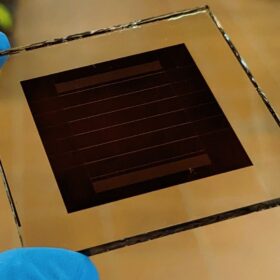
Italian startup develops 20.7%-efficient mini perovskite solar modules with 99.6% geometrical fill factor
Solertix claims to have reduced yield losses in cell-to-module scaling by utilizing ultranarrow interconnection of 19.5 μm. It also says the proposed interconnection technique may be used to achieve a 30% efficiency in area-matched 4T tandem designs featuring a perovskite module over a silicon cell.
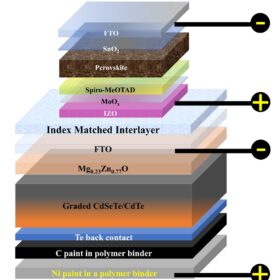
Perovskite-cadmium telluride tandem solar cell based on special electrode achieves 24.2% efficiency
An Indian-US research team has fabricated a four-terminal perovskite-cadmium telluride tandem solar cell by utilizing a highly conductive and sputtered transparent electrode to increase the current density of the bottom cell. The tandem device combines a 18.3%-efficient top perovskite cell and a 19.53%-efficient cadmium telluride bottom device.

Chinese PV Industry Brief: Renshine plans GW-scale perovskite PV panel factory
Renshine Solar says it will open a gigawatt-scale perovskite PV module factory in Jiangsu province, with a planned investment of CNY 1 billion ($138 million). In January, it reported that its perovskite solar panels had achieved a power conversion efficiency of 18.4%.
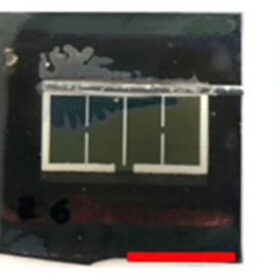
Strategies to address thermomechanical instability of perovskite solar modules
A U.S. research team has investigated the thermomechanical reliability of metal halide perovskite (MHP) modules and cells in an effort to identify the best strategies to improve their stability under thermomechanical stressors. The scientists discussed, in particular, film stresses, adhesion of charge transport layers, and instability under light and heat.
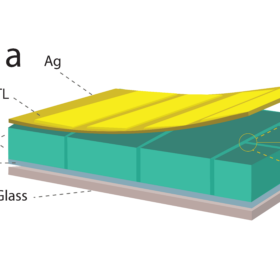
Perovskite solar cell based on self-disintegrating seeds achieves 23.73% efficiency, 83.64% fill factor
A Chinese research group including scientists from module maker Tongwei has designed a perovskite solar cell with remarkable perovskite film quality through the so-called self-disintegrating seed strategy. The device not only achieved one of the highest fill factor values ever recorded for perovskite solar to date, but also showed remarkable stability.
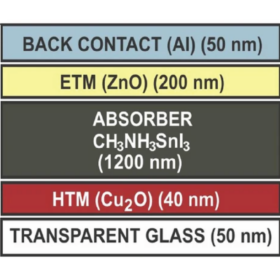
Lead-free inverted perovskite solar cells without transparent conducting oxides may achieve 30% efficiency
Researchers in Nigeria have proposed to build inverted perovskite solar cells exclusively with all-inorganic transport materials and a lead-free perovksite absorber. Through a series of simulations, they showed these device may achieve efficiencies over 30% with low production costs.
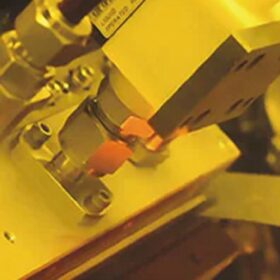
Toray Engineering offers coating equipment for perovskite PV module manufacturing
The Japanese industrial technology supplier is shipping coating tools for perovskite solar panels with dimensions up to 1,000 mm × 2,000 mm. The company will also offer soon a support for 2,400 mm ×1,200 mm sizes.
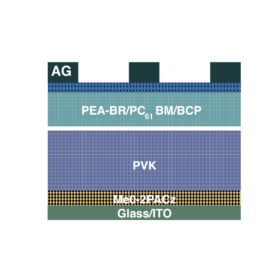
Inverted perovskite solar cell based on self-assembled monolayer achieves 24.38% efficiency
Researchers in China have designed an inverted perovskite solar cell with a new strategy aimed to optimize the cell’s bottom region. The proposed cell was treated with two molecules known as 2-mercaptoimidazole and 2-mercaptobenzimidazole and was based on a hole transport layer relying on a self-assembled monolayer.

Carbon-based perovskite solar cell without hole transport layer achieves 14.15% efficiency
Researchers in China have outlined a new surface engineering strategy to build low-cost solar cells without a hole transport layer. The devices were treated with benzoylcholine halide to reduce non-radiation recombination and achieved remarkable efficiency and stability.

All-perovskite tandem PV cell based on carboranes hits 27.2% efficiency
Researchers have developed a thermal regulation strategy to improve the performance of inverted tin-lead perovskite tech for all-perovskite tandem solar cells. It has an efficiency of 23.4% and contributed to a 27.2% efficiency in a tandem cell while ensuring stability.
