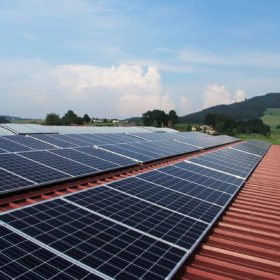
France assigns 152 MW in commercial and industrial PV tender
The final average price for power generated by solar systems with capacities ranging from 100 kW to 500 kW came in at €96.49/MWh. The price for installations ranging in size from 500 kW to 8 MW was €86.17/MWh.

Thyssenkrupp increases annual electrolyzer capacity to 1 GW
The German conglomerate’s electrolyzers boast efficiency levels of up to 80%. The modular devices can be connected to form plants of almost any size.
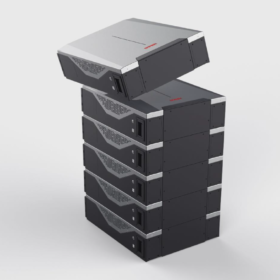
Lithium battery for low- and high-voltage storage
Dubai-based Weco has unveiled a new lithium battery solution that can operate in parallel as a low-voltage storage system or in series as a high-voltage battery with no hardware changes. The batteries can be mounted on walls or set up in a stack configuration.

First Solar backs carbon pricing for wholesale electricity
First Solar has backed carbon pricing in comments submitted to the U.S. Federal Energy Regulatory Commission. The company also co-founded a global policy institute to support carbon pricing as a “cost-effective, equitable and politically viable climate solution.”
Valmont becomes largest shareholder of Brazilian PV company Solbras
The parent of Italian tracker business Convert has entered the Brazilian solar market with plans for agri-business products and other systems.

Agrivoltaics works better with leafy greens, root crops
U.S. researchers have created a new model to assess the overlap between solar potential and underlying land use. The areas with the largest potential are the western United States, southern Africa, and the Middle East. The researchers concluded that croplands, grasslands, and wetlands are the top three land classes for PV projects linked to agricultural activities, while barren terrain, traditionally prioritized for solar PV system installation, ranked fifth.
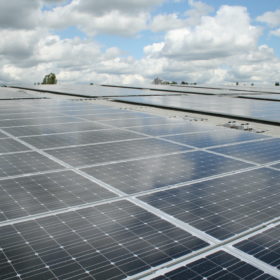
Flanders to reintroduce subsidies for rooftop PV
Four years after the expiration of green certificates for PV systems up to 10 kW, the authorities in Belgium’s Flanders region want to support solar again – but this time in the form or rebates. A new scheme will likely go into force in 2021, with up to €1,500 to be awarded per PV system.
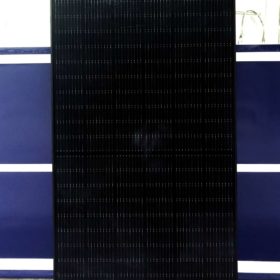
Jolywood unveils black bifacial module
The new JW-HT132N series features six n-type panels and offers 345 W to 370 W of frontside power output, with efficiencies ranging from 18.68% to 20.04%. The panels are manufactured with a transparent backsheet, with black mesh and a black frame.
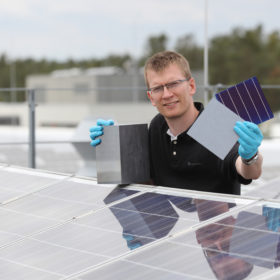
German scientists study causes of LeTID
Researchers at Germany’s Fraunhofer Institute for Integrated Systems and Device Technology IISB are trying to understand the causes of light and elevated temperature induced degradation (LeTID) in PERC solar cells. Initial investigations should provide a comprehensive understanding of the process and material dependency of LeTID and related degradation effects in monocrystalline and multicrystalline PERC solar cells.

100% solar-powered floating villa
Australian designer Chuck Anderson’s Lilypad is a 100% solar-powered villa floating off Palm Beach in north Sydney.
