Grid bottlenecks threaten 120 GW of planned renewables in Europe
Latest analysis from Ember finds major grid bottlenecks in transmission and distribution networks across Europe, threatening the viability of both future utility-scale and smaller-scale residential solar in the most impacted countries.
Tracker-based agrivoltaics turn fields into wind-safe zones
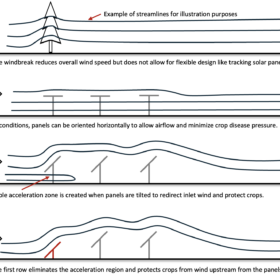
Cornell University researchers demonstrated that tracking solar panels in agrivoltaic systems can protect crops from wind damage while allowing airflow, outperforming traditional single-row tree windbreaks. They also proposed a new lowered-first-row panel design that improves wind protection, achieving up to 86% reduction in shelter-zone wind speeds under extreme conditions.

Ion beam technology offers pathway to low-defect silicon solar cells
Researchers in India demonstrated that ion beam implantation enables precise boron doping in silicon solar cells, reducing defects and improving charge transport. The proposed approach could support more efficient and reproducible p–n junctions, offering a pathway to higher-performance silicon photovoltaics.
Middle East conflict lifting PPA valuations, says Pexapark
Swiss analytics firm Pexapark says the latest developments in the Middle East are having a visible effect on long-term power purchase agreement (PPA) valuation in Europe, as the market begins to reprice the coming years.

EU energy regulator opens consultation into PPA market
The European Union Agency for Cooperation of Energy Regulators (ACER) is running a public consultation on the evolution of the bloc’s power purchase agreement (PPA) market to identify existing initiatives and challenges.

Philippines accelerates grid entry for 1.28 GW of solar
The Department of Energy of the Philippines says it is fast tracking 12 solar projects for grid entry in April in response to changes in the global oil markets caused by conflict in the Middle East.
Italy, Spain set solar records in March
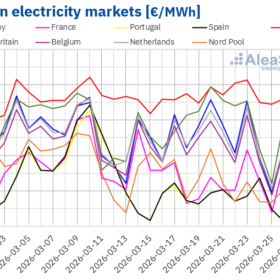
AleaSoft Energy Forecasting finds the weekly average electricity price fell across most major European markets last week as gas prices dropped. Solar energy production increased in southern Europe, helping Portugal and Spain to record their lowest daily average prices since 2024 and 2013 respectively.
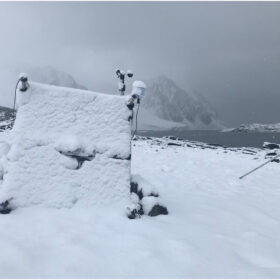
Solar above 60° North: The Arctic as PV’s next frontier
An IEA-PVPS report finds that solar power above 60° North is not only viable but rapidly expanding, driven by cold-climate performance gains, bifacial technologies, and rising energy security needs. While challenges like extreme seasonality, snow, permafrost, and scarce data remain, Arctic PV is emerging as a critical—and technically distinct—frontier for global solar deployment.
Solar parks reshape soil biodiversity, plant traits
A study of 20 solar parks in southern France found that soil biodiversity and respiration drop significantly under panels, especially in mown areas, while plant traits like height and leaf area can increase under grazing. The researchers highlighted that climate, management type, and solar shading all shape soil and plant responses.
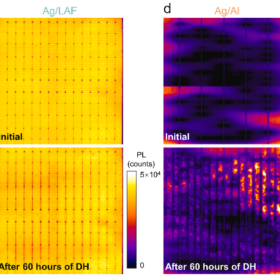
UNSW unveils new ageing method to assess TOPCon solar module degradation
UNSW researchers developed a chemically selective, nitrate-based, single-sided accelerated ageing method for TOPCon solar cells that replicates the mildly acidic environment inside EVA-encapsulated modules. The proposed approach enables rapid, physically meaningful screening of front-side metallisation stability, reliably predicting module-level degradation and reducing development time and costs, according to its creators.
