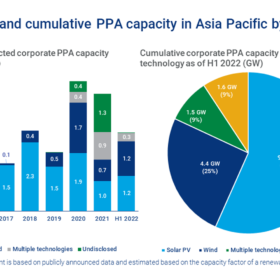
Solar dominates renewable corporate PPAs in Asia Pacific, says WoodMac
Corporations in the Asia-Pacific region are set to contract a record 7 GW of renewable capacity in 2022, according to a new report by Wood Mackenzie. Solar accounts for 57% of the region’s contracted corporate renewable power purchase agreements (PPAs) to date. India, Australia and Taiwan account for 89% of overall capacity in the region.
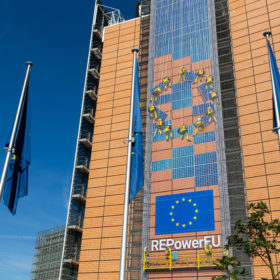
European Commission aims to accelerate renewable permits
The European Commission wants to bridge the time until the revised Renewable Energy Directive RED IV has been passed and translated into national law, partly by improving conditions for PV systems up to 50 KW in size.
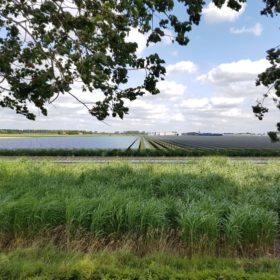
Vattenfall to build solar array along Dutch highway
Sweden’s Vattenfall has revealed plans to build a subsidy-free, large-scale solar plant along the A6 highway in the Netherlands. Construction is expected to begin in 2024, with operations to start in late 2024 or early 2025.
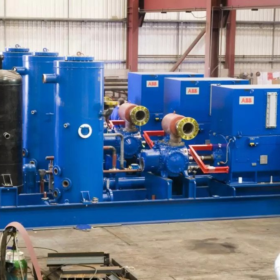
High-temperature heat pumps for industry
A new EU-funded project aims to show how heat pump technologies could supply various industrial processes with heat in the 90 C to 160 C temperature range. It also looks at how heat can be extracted from renewable sources like solar thermal, as well as ambient heat and industrial waste heat.

Canada introduces investment tax credits for renewables
Canada’s new 30% tax credits for clean technology are designed to level the playing field with the United States and spur the adoption of green technologies.
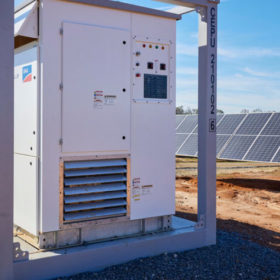
RWE to build 220 MW battery storage facility in Germany
RWE plans to build a storage facility to provide grid-balancing services for its power plants in Germany. The batteries will be installed at two RWE power plants in the state of North Rhine-Westphalia.

Indian steel manufacturer to set up 70 MW solar park for self-consumption
India’s ISMT has revealed plans to set up a 70 MW (DC) captive solar plant with an investment of up to $37.1 million.
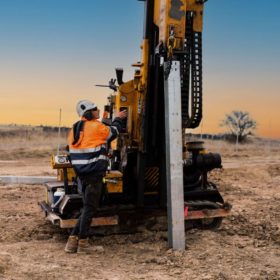
ACEN to build 400 MW solar farm in Australia
A unit of Philippines-based clean energy company ACEN Corp. has agreed to develop the 400 MW Stubbo Solar Farm in Australia.
Most new solar panels retain 80% production after 30 years
A five-year Sandia Labs study on solar module degradation shows that 13 out of 23 tested module types have effective lifetimes exceeding 30 years.
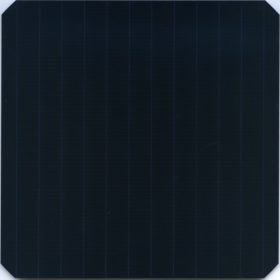
New study looks at Sundrive’s 25.54% silver-free heterojunction solar cell
A new scientific paper takes a closer look at the record-breaking efficiency that Australia’s Sundrive announced for a silver-free heterojunction cell in September 2021, as certified by Germany’s Institute for Solar Energy Research.
