
REC Silicon and Mississippi Silicon agreement bolsters U.S. solar supply chain
The recent Hanwha investment will enable a re-start of the currently idle Moses Lake plant in 2023 and make available high volumes of cost competitive, high quality, and low carbon solar grade polysilicon.
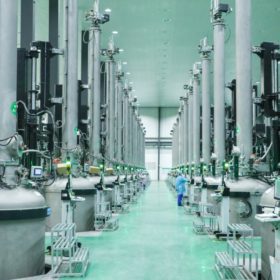
Chinese PV Industry Brief: Power rationing affects solar module production
China installed 37.73 GW of solar in the first seven months of this year, according to official estimates. JinkoSolar said it is struggling to cope with power rationing in Sichuan province, while Shunfeng said it expects to record a hefty net loss for the first half.

Switzerland wants to deploy solar along highways
The Swiss Federal Council has amended the National Roads Ordinance to allow the country to generate renewable energy on free surfaces along major thoroughfares, such as noise barriers and rest areas.
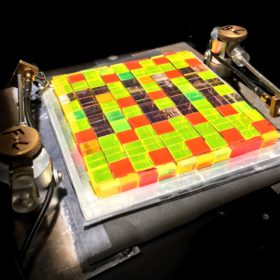
Cubical luminescent solar concentrator devices in urban environments
An international group of researchers has developed a cubical luminescent solar concentrator (LSC) PV device that can be assembled in mosaic configurations for applications in urban environments. The best-performing device achieved a power conversion efficiency of 11.6%.

Solar-powered coffee bikes from Germany
Germany’s Liontron said it can prepare 300 cups of coffee per day from the PV modules and storage tech on its bicycles for beverage vendors. This means its mobile coffee shops can operate without grid connections.
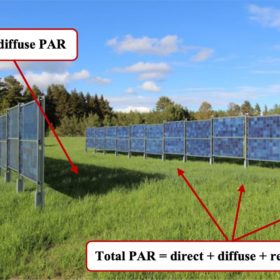
New models to predict crop yields in agrivoltaics
A Swedish-Italian research group has applied state-of-the-art models for global horizontal irradiance decomposition to assess photosynthetically active radiation in agrivoltaic projects – an important variable to properly predict crop yield.
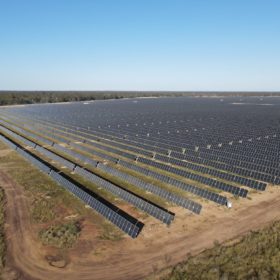
Australia’s largest solar farm begins exporting to grid
France’s Neoen has started exports to the grid and is now rapidly advancing toward full production at the massive 400 MW solar farm it has developed in Queensland, Australia.
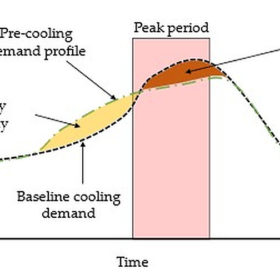
Rooftop PV for pre-cooling of residential, commercial buildings
Australian researchers have developed a way to use rooftop PV to run air conditioners to pre-cool residential and commercial buildings. They have identified several factors that could help reduce a building’s energy costs.

TotalEnergies, InVivo switch on vertical agrivoltaic system in France
TotalEnergies said its new 111 kW pilot facility in France will show the impact of solar panels on agricultural yield, while also shedding light on biodiversity, carbon storage, and water quality.

ReNew secures $1 billion loan for 1.3 GW hybrid wind-solar project in India
ReNew Power, a Nasdaq-listed Indian developer, has secured $1 billion in external commercial borrowings for a 1.3 GW wind-solar energy project, backed by up to 100 MWh of battery storage. The project is co-owned by Japanese investor Mitsui.
