
New study debunks several myths about floating PV
Dutch researchers have shown that bifacial floating PV arrays do not benefit significantly from sunlight reflected from the water, and claim that the water only reduces panel temperatures by a small amount. Bird droppings may also affect system performance, but floating PV could achieve a lower LCoE than ground-mounted arrays if such issues are addressed, they say.
Poland allocates 800 MW of solar in mixed PV-wind auction
Overall, the Polish energy regulator has allocated 1.7 GW of renewable energy capacity in a procurement exercise that was open to projects exceeding 1 MW in size. The auction concluded with a lowest price of $0.051/kWh, slightly up from the auction of the same kind held last year.

Jamaica turns to solar for irrigation, water treatment
The Jamaican government has tendered a solar project intended at powering a water treatment plant and has also announced it will power, with PV, all irrigation systems operated by the National Irrigation Commission.

Greece supports rooftop PV and residential storage through energy efficiency program
Launched in November, the “saving-autonomous” program is currently seeing strong interest from homeowners. The program has an €850 million budget and is intended at enabling around 600,000 homeowners to make their houses more energy-efficient by 2030. It includes the installation of a rooftop PV system in the frame of a renovation project.

Colored facade solar panels with 13.8% efficiency
Dutch startup Solarix has developed a new line of facade solar panels featuring 13.8% efficiency and output ranging from 110 to 180 W, depending on the module size and color. The panels can be bolted or glued onto aluminum mounting systems applied to facades.
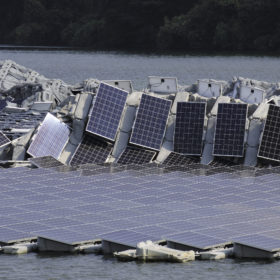
Extreme weather causing US solar insurance premiums to explode
Catastrophic weather events in Texas and California have led to steep increases in insurance premium costs, according to a new analysis by Norton Rose Fulbright.
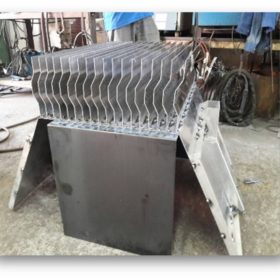
Solar module passive cooling with lapping fins
Malaysian researchers have proposed a new passive technology for solar module cooling based on fin heat sinks. The tech ensures lower PV system payback times and reduces operating module temperatures by up to 26 C.
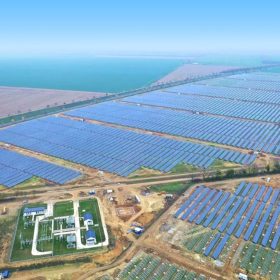
100 MW solar park comes online in eastern central Europe
The solar plant is located in Kaposvàr, southwest Hungary, and will sell power at €0.09/kWh under the country’s feed-in tariff regime.

Focus on stability as tandem cells approach 30% efficiency
The Helmholtz Zentrum Berlin set a world record for perovskite-silicon tandem cell efficiency last year at 29.15%. The group has delved further into the cell materials, looking to better understand mechanisms behind the impressive efficiencies achieved so far. Their latest work shows that with the current cell design, long term stability at efficiencies up to 32.4% should be possible.

Kazakhstan’s solar auctions conclude with lowest price of $0.035/kWh
The Kazakh authorities allocated 55 MW of PV capacity in two different procurement exercises. Two projects, totaling 40 MW, were secured by Russian module manufacturer Hevel Solar.
