
Creating an alternative PV supply chain in the US is no cakewalk
The US Solar Energy Industry Association in late 2020 launched a campaign against forced labor and said it was “strongly encouraging” member companies to adjust their supply chains by June. Here is what will likely happen.
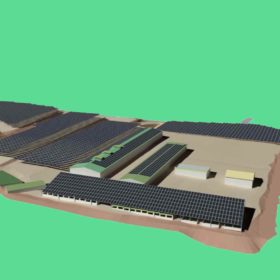
When agrivoltaics meet energy communities
Spain’s Tranesol is setting up two energy communities that will be powered by 2.5 MW of agrivoltaics. The two facilities will be located in the Valencian Community, which is at the forefront for supporting projects for solar power sharing.
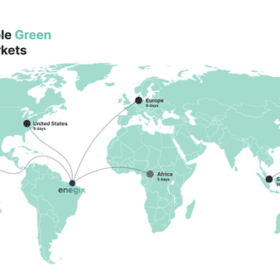
Brazil may host $5.4bn green hydrogen plant
The facility is expected to be located in the state of Ceará and to be powered by around 3.6 GW of wind and solar facilities located in the region. The project developer is Australia-based Enegix Energy.
Solar modules prices rose by up to 15% in China, Jinko’s vice president says
According to JinkoSolar vice president Dany Qian, PV panel prices rose significantly since the second quarter of last year due to an increasing shortage of polysilicon, glass, silver, and module frames. She also stated that rushing demand cannot stop prices from rising for at least the next six months or longer, until sufficient capacity ramps up.

Modular lift system for solar panels
Altrex, a scaffolding and ladder producer in the Netherlands, has developed a new modular lift solution for solar panels. The system can raise one solar panel at a time and can be operated by a single installer using nothing other than a cordless drill, the company claims.
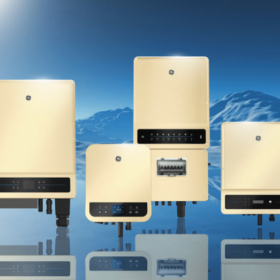
GE chooses Australia to launch new line of solar inverters
Just as Australia thought its pioneering days were over, it has become the first country in the world to sell General Electric’s new solar inverters.
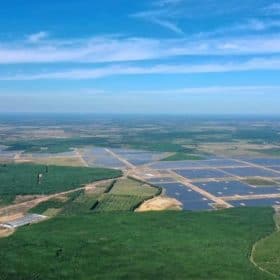
Vietnam sees 350 MW solar park come online
Chinese inverter maker Sungrow revealed a 350 MW solar facility was energized in Loc Ninh County, Binh Phuoc Province. The project secured a FiT of $0.0709 per kWh.
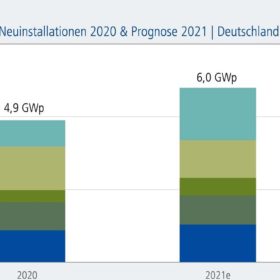
EUPD Research expects 6 GW of new solar for Germany in 2021
According to the analysts, the German photovoltaic market would grow by 23% this year, compared to 2020. Strong growth is expected to come from large scale projects.
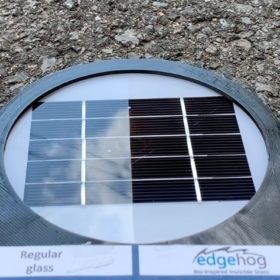
Canadian start-up secures US$2.5 million to launch omnidirectional anti-reflective glass
Edgehog secured the funds from Sustainable Development Technology Canada (SDTC). The special glass is hydrophobic and is claimed to be able to reduce the accumulation of dust and residue, thus reducing the need for maintenance.

Kosovo to host 150 MW solar park
The solar plant is planned to be built in southwestern Kosovo and to come online next year.
