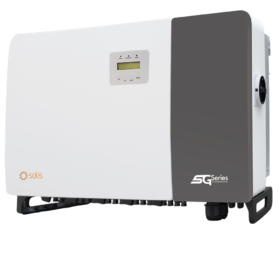
New 5G string-inverter for commercial applications from Ginlong
The Chinese manufacturer has integrated the Solis 110 kW string inverter into its 5G tech platform. The company claims the upgraded device can offer stronger system returns and a lower levelized cost of energy. The price of the Solis-110K-5G inverter is €0.035/W.
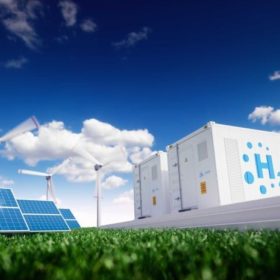
The solar highway to Australia’s renewable hydrogen economy
The Australian Renewable Energy Agency says that on-site solar electrolysis is not just the most cost-effective way of developing a domestic and export hydrogen economy, but perhaps the only way.

Spanish oil giant begins work on its first solar plant
Repsol announced the start of construction on its 126 MW Kappa solar park. The project consists of three plants located in the municipality of Manzanares, Ciudad Real. It will require a total investment of €100 million.
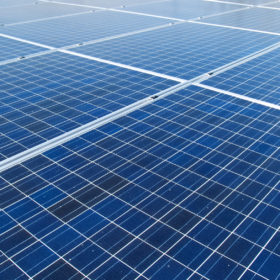
US investor buys 317 MW of solar in India
Marking its second infrastructure investment in India, U.S.-based KKR will acquire 169 MWp of Mumbai-based Shapoorji Pallonji Infrastructure’s solar assets in Maharashtra and 148 MWp in Tamil Nadu for a sum of Rs 15.54 billion (approximately US$204 million).
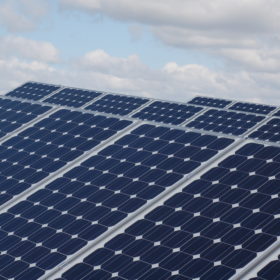
Amerisolar plans new 200 MW solar panel factory in Brazil
Chinese manufacturer Amerisolar and Brazilian energy company Nova Renováveis are planning to set up a 200 MW solar module manufacturing facility in Belo Horizonte, in the Minas Gerais state.
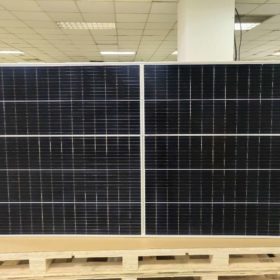
TÜV Rheinland confirms 515.8 W output for Trina’s new modules
Trina Solar has been producing its 500 W modules in series for a month now and plans to increase their output to more than 600 W in the future.

Ireland’s first renewables auction
Clean energy developers have three days left to pre-qualify for the first procurement exercise staged by the Irish Renewable Electricity Support Scheme. Solar will compete with wind – on and offshore – and biomass projects.
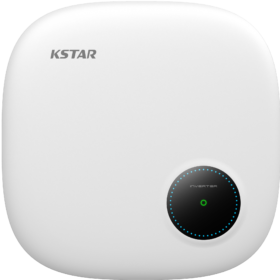
Kstar launches new inverter series for rooftop arrays
The transformer-free products have a power range of 3-6 kW and efficiency of 97.8%. The Chinese manufacturer says the devices are designed to accurately match the voltage and phase of the grid sine wave AC waveform.

Uncapping Germany’s 1 TW of PV potential
EuPD Research has conducted a survey showing that potential investors see Germany’s 52 GW cap for solar incentives in the residential segment as the main barrier to future growth. Renewable energy trade body Bundesverband Neue Energiewirtschaft, meanwhile, said the nation has the potential to reach 1,000 GW of installed solar capacity by 2050.

‘Free-form’ organic PV
French organic PV module manufacturer Armor said it began manufacturing free-form PV modules in early April. The new technology will allow the company’s ASCA PV film to be produced in a range of different shapes.
