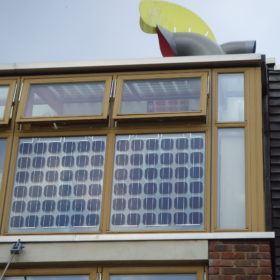
MIT researchers say PV innovations should be deployed in niche markets first
Solar module manufacturers should begin testing new technologies in higher-value niche markets, say scientists at the U.S. institution. For example, bringing perovskite technology directly to the mainstream market remains prohibitive in terms of initial investment but segments such as building-integrated PV or microelectronics devices may offer better routes to commercial maturity.
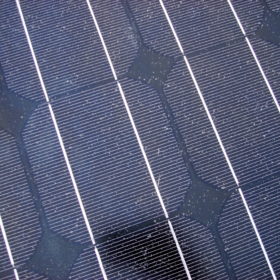
Hunting hidden electricity in crystalline solar cells with new encapsulation technique
Korean researchers claim it is possible to extract more than 10% of ‘hidden electricity’ in crystalline solar cells using a new encapsulation process based on poly‐dimethylsiloxane coatings and a three-dimensional module structure. Compared to EVA films, the new coating is said to avoid cutting off short-wavelength light.
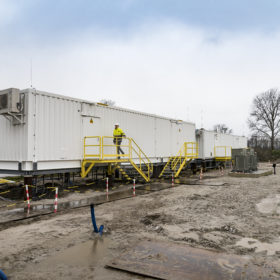
Netherlands to address renewables grid constraints with 1 GW of mobile substations
Dutch transmission system operator Enexis is deploying 11 “e-house” substations in the northern Netherlands, where grid capacity for large scale clean energy projects is limited. The company said it will invest €43 million in the plan “to speed up the energy transition”.
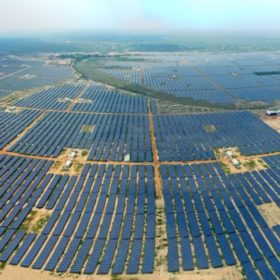
Total to buy 50% stake in Adani Group’s 2.1 GW solar portfolio
The French oil and gas giant—which is already a partner in Adani’s natural gas business—will now invest US$ 510 million to buy 50% stake in 2,148 MW operating solar plants owned by Adani Green Energy Limited.
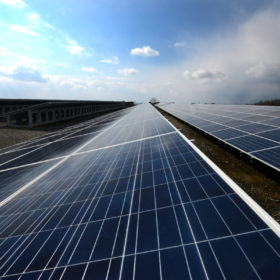
Construction starts on 50 MW PV plant in Togo
The 50 MW Sheikh Mohammed Bin Zayed photovoltaic power plant is located in the Blitta region. The plant is being built by Amea Togo Solar – a subsidiary of Amea Power, a global renewables developer based in the United Arab Emirates.
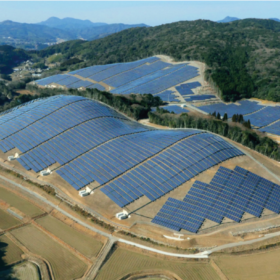
Hanwha Q Cells acquires 1 GW of PV projects in Spain
The projects are located across several Spanish provinces. The seller is Spanish developer RIC Energy.

How solar parks change landscape perception
New research based on participatory photography and focus groups has shown how solar parks can change people’s landscape perception through a number of factors, not exclusively visual. According to the study, people that see landscapes in an idyllic way tend to oppose the presence of a solar park, while people with a more utilitarian concept of the rural landscape show stronger acceptance.

Iraqi Kurdistan resorts to solar to reduce power shortages
A 2MW pilot project is now being developed in the Governorate of Duhok. The project was funded with $2 million by the European Union.
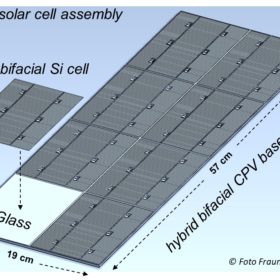
Fraunhofer ISE researchers develop bifacial hybrid HCPV module with output of 326 W/m2
The EyeCon module has a hybrid power output of 326 W/m² or a bifacial efficiency of 28%, calculated with the available global plus backside irradiance. According to the research team, the silicon cell generates between 23 and 42 W/m² of additional power when the diffuse irradiance component increases from 8 to 30%.

21-year solar PPA for three French airports
The airports of Paris-Charles-de-Gaulle, Orly and Le Bourget will be provided with solar power by French solar company Urbasolar and energy provider GazelEnergie. The PV plants related to the contract are now in development and will begin delivering power in 2021.
