
Albania launches 140 MW solar tender
The country’s second large scale solar plant will be built in the Karavasta area, in the centre of the country. Half the energy produced will earn a tariff payment of no more than €55/MWh, the rest will be sold on the energy market.

Armenia aims to improve net metering for small scale solar
The government is being helped by the European Bank for Reconstruction and Development as it designs a new net metering system. The country already supports large scale PV plants and small solar parks.

Where there’s smoke… there’s reduced PV output
A minor concern it may be, compared to the tragic loss of life, livelihoods and biodiversity caused by the bushfires still ravaging parts of Australia, but reduced output by PV systems due to smoke haze is an unwelcome bi-product of blazes that have burned at a scale and ferocity never seen before.

Panasonic claims 16.09% efficiency for lightweight perovskite solar module
The device has an area of 802cm² and thickness of 2mm. The manufacturer claims it improved module performance through an inkjet coating method and a reduction in weight by using thin glass substrates.

Mysterious new chlorophyll with potential PV applications
Japanese researchers are studying the ‘Chl f’ substance which features a pigment in photosynthesis which can absorb far-red light from the lower end of the spectrum.
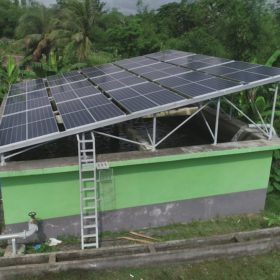
Crop yield rises with solar-powered irrigation
PV systems have helped farmers in the Philippines become less dependent on rain. Projects in Camarines Sur have shown pumping water with solar is not only cheap but can also raise rice yield.

Central Bank of Brazil launches two more solar tenders
Brazil’s biggest lender wants to secure solar power through a leasing arrangement. The central bank expects to buy around 8 GWh of electricity per year for its agencies in the state of Bahia and another 2 GWh in Ceará.

Czechia wants another 1.9 GW of solar by 2030
The raised renewable energy ambition has been dismissed by the domestic solar association, which accuses president Miloš Zeman of wanting to destroy the Czech PV sector. In 2019, the country added only 7 MW of new PV installations.
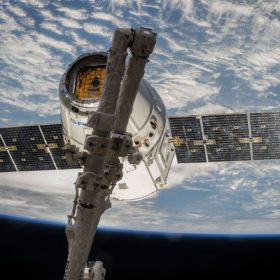
When losing a few PV panels can cost millions of dollars
European satellite operator Eutelsat has revealed one of the two solar arrays on its recently launched 5 West B satellite has been lost. Only 45% of the craft’s generation capacity can be operated, hitting the company’s bottom line to the tune of $5-10 million.

Pilot agrovoltaic project with mobile PV modules launched in France
The solar facility, near Lyon, will be developed by Engie unit Compagnie Nationale du Rhône. Tests will be carried out for three years at a project intended to demonstrate the benefits of combining solar with agriculture.
