
Pushing perovskite solar cells to the ultimate thickness limit
Researchers in Singapore have developed fully vacuum-processed ultrathin perovskite solar cells with absorber layers as thin as 10 nm, achieving high transparency and stable efficiencies up to 12%. These cells balance optical transparency and electrical performance, offering scalable, design-flexible photovoltaics suitable for seamless integration into buildings.

Indonesia’s path to 100 GW of solar
A study from the Institute for Essential Services Reform and Indonesia’s Coordinating Ministry for Economic Affairs explores how Indonesia can turn its target of deploying 100 GW of solar from mandate to mobilization.

Tongwei moves into hybrid heterojunction back contact solar cell technology
Tongwei is partnering with GS-Solar and Golden Solar to develop a large-scale manufacturing facility for hybrid heterojunction back-contact (HBC) solar cells that combine heterojunction passivation, tunneling oxide and polysilicon structures used in TOPCon designs, and the grid-free front-side architecture typical of back-contact technologies.
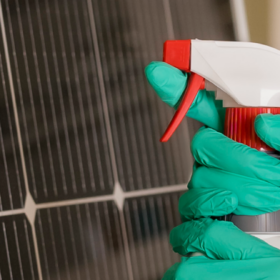
Beware of cleaning photovoltaic panels with dishwashing detergent
Researchers in Finland found that dishwashing liquid reduces solar module transmittance and performance, leaving residues even after rinsing. They recommend avoiding its use for cleaning solar panels.

European prosecutor investigates suspected solar tender fraud in Slovenia
The European Public Prosecutor’s Office is investigating an unnamed solar company after it breached conditions of a public tender for the co-financing of small solar plants. The office says house searches were carried out this week by Slovenian police, leading to the seizure of documents, electronic data and devices.

What are the selling points of marine energy?
Marine energy is renewable and generally predictable. It could thus compensate for the unplanned intermittency of solar and wind generation, its proponents argue. But several challenges still need to be overcome for the energy to become widely used.
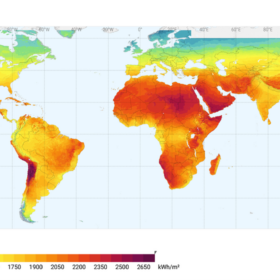
Solar generation performance with regional weather conditions deviating from long-term averages
Global solar PV continues its rapid growth, reaching around 650 GW in 2025, with record solar irradiation extremes across regions such as East Asia, India, and Latin America. With current production capacity and emerging technologies like perovskite-silicon tandem modules, PV is poised to surpass all other electricity generation technologies combined by the end of the decade.
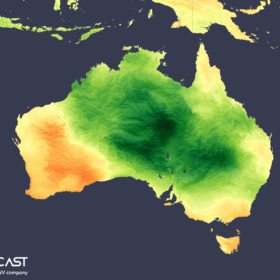
Wettest February since 2011 cuts irradiance across most of Australia
In a new weekly update for pv magazine, Solcast, a DNV company, reports that Australia’s wettest February in 15 years produced solar irradiance deficits of 15–30% across the country’s central and eastern regions.

Panasonic debuts propane heat pump for light industrial, multi-residential buildings
Designed for commercial and multi-residential buildings, the Aqua‑G EVO heat pump can replace gas boilers, cascade up to eight units, and integrate with Panasonic’s complete HVAC ecosystem.
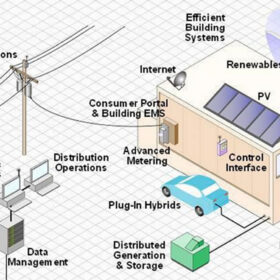
Industry 4.0 technologies raise cyber risks for smart renewables grids
An international research team developed a multi-stage intrusion detection system that uses supervised and unsupervised AI techniques to detect and mitigate cyber threats in smart renewable energy grids. The system can reportedly achieve high accuracy, low false positives, and real-time detection, outperforming traditional intrusion detection system models.
