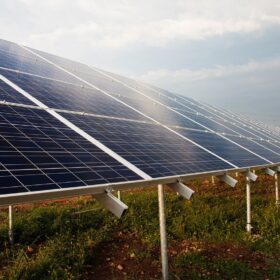
Chint secures approval to build 100 MW of solar in Bangladesh
Chint has obtained approval to build a 100 MW solar project in Bangladesh, in order to supply electricity to Bangladesh Power Development Board (BPDB) under a 20-year power purchase agreement (PPA) at a fixed tariff of $0.0998/kWh.
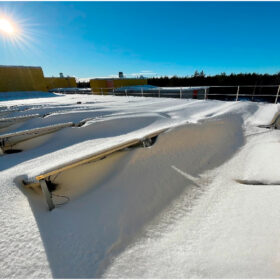
Scientists analyze seasonal performance of rooftop, vertical PV in the Arctic
New research from Finland shows that the best season for rooftop PV generation in the Arctic is spring, and that the best tilt angle for rooftop systems is 28 degrees. It also showed that vertical PV installations perform better in winter.

Solar for wildfire detection
Dryad Networks has developed an AI-powered sensor to detect wildfires and notify first responders.
PV cell technology trends
Ongoing innovation in PV cell technology will have major impacts as solar is deployed at a “multi-terawatt scale” over the next two decades, according to a global team of scientists.

Amea Power secures PPA for 25 MW solar-plus-storage project in Djibouti
Amea Power has secured a power purchase agreement (PPA) for a 25 MW solar-plus-storage project in Djibouti. It will be the country’s first independent power producer (IPP) project and is now in development under a build-own-operate and transfer (BOOT) framework.
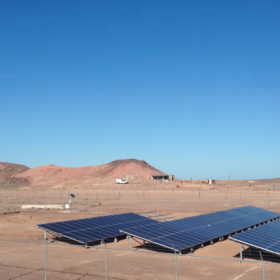
New control technique for microgrid-connected PV systems
An international research group has applied for the first time integral backstepping control (IBC) as a control strategy for PV systems connected to microgrids. Through a series of simulations, the scientists found the new approach can provide better results than classic backstepping control (BC) and other techniques.

BayWa re to acquire Brazilian PV distributor Ribeiro Solar
BayWa re has agreed to acquire Ribeiro Solar, a Brazilian PV distributor headquartered in Curitiba, Paraná. The company also operates distribution centers in Paraná, Rio Grande do Sul, and Pernambuco.
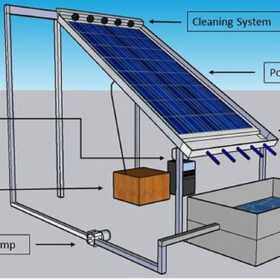
Water-based solar module cleaning tech for rooftop PV
Scientists in Pakistan developed a new cleaning system that reportedly not only reduces power losses caused by soiling but is also able to increase PV module performance by reducing its temperature. It could be applied to both residential and commercial PV systems.

Arizona approves cut to compensation rates for rooftop PV
The authorities in Arizona have upheld the precedent of capping the reduction at 10% for compensation rates for rooftop PV, following a proposal for a 37% cut. However, there is a possibility of new risks emerging, according to the Arizona Corporation Commission.

South Korea plans PV-powered 1 GW data center complex
The South Korean government says it plans to set up a 1 GW data center complex powered by solar. The expansive facility will be built in Haenam, a county in South Jeolla province. It will accommodate 25 data centers, each with a capacity of 40 MW.
