
Testing photovoltaic modules in Antarctica’s summer
The Turkish Antarctic Expedition placed four different PV module types – monocrystalline, polycrystalline, flexible and transparent – outside of their research camp for three months to compare performance, finding that monocrystalline was the clear winner.
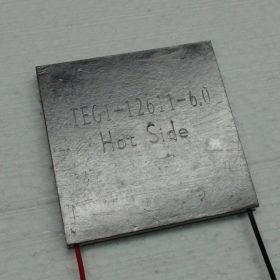
Reducing PV module temperature with water, thermoelectric coolers
Scientists in India have suggested to use thermoelectric cooling to enhance PV module performance. Through a field experiment, they found that thermoelectric coolers combined with water can reduce solar module temperature by up to 38 C.

Chinese polysilicon makers driving industry’s second great consolidation
The 275,000 metric tons of annual polysilicon production facilities pushed out of the industry by the expansion of big Chinese producers is more than double the capacity lost in the last great poly market shake-out, between 2010 and 2013.
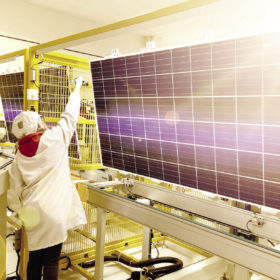
Canadian Solar joins the 500 W-plus panel club
The Chinese-Canadian company has unveiled a range of high-power modules which are set to go into mass production by early next year. The series includes a commercial and industrial rooftop-dedicated product offering a reported 405 W.
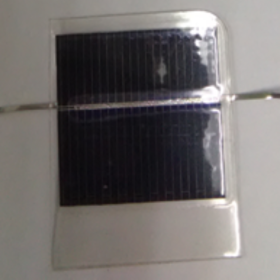
Pouch lamination technique for solar cell encapsulation
Scientists in India have used a pouch laminator to encapsulate a polycrystalline solar cell. The resulting device, the researchers claim, showed better UV photon absorption than solar cells treated with a polymer surface coating.

Canadian Solar signs power supply deal for biggest project in Alberta
The solar manufacturer and developer was racing to sell off a significant chunk of its late-stage portfolio by the end of last month to rebound after assuring investors the losses registered in the first quarter of this year would prove to be a one-off.
Tunisian module maker Ifrisol to increase capacity to 750 MW
The manufacturer plans to add 350 MW of manufacturing capacity at its two sites in Tunisia by next year. The ramping up is due to new orders from India and other foreign markets.
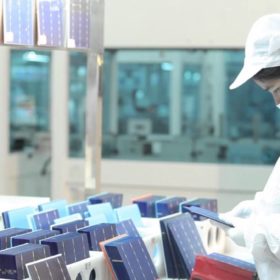
PERC market to reach 158 GW by 2022
Taiwan-based analyst firm, WisolPro says the global capacity for PERC cells is rapidly increasing, with the technology likely to replace polycrystalline cells. HJT, thin film, and n-type PERT technologies are also on the rise.

Austria: Energetica aims for gigawatt module production capacity by Q3 2019
In a bombshell announcement at the start of the week, the PV company said it would construct a gigawatt solar module fab in Austria. Now, Rene Battistutti, CEO at Energetica Group tells pv magazine why he believes the company’s modules are competitive with Asian products.
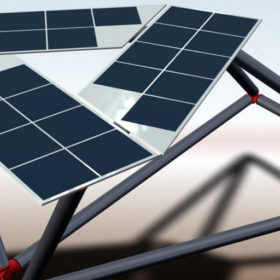
OPES Solution, Fraunhofer CSP develop ultra-light solar modules
The new products for off-grid applications are two thirds lighter than standard modules.
