
China’s polysilicon prices stabilize amid consolidation push
In a new weekly update for pv magazine, OPIS, a Dow Jones company, provides a quick look at the main price trends in the global PV industry.
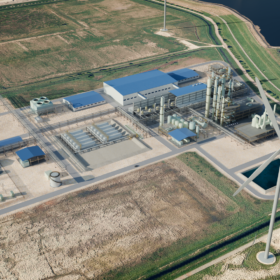
Dutch startup secures technology license, contractor for polysilicon plant
Resilicon says the basic engineering phase of its planned polysilicon plant in the Netherlands is underway after the project secured a technology provider and engineering, procurement and construction contractor. Once completed, the plant will produce high-purity polysilicon for solar supply chains.

Global PV outlook clouded by policy shifts and China export risks
The global PV market faces uncertainty amid fluctuating module prices and evolving energy policies. Changes to Chinese export taxes may further raise module costs, affecting European and Asian markets.
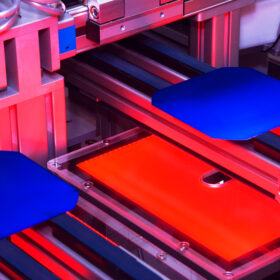
OCI Holdings acquires 65% stake in 2.7 GW Vietnamese solar wafer factory
South Korea’s OCI Holdings is entering the solar wafer business with a majority stake in a wafer plant in Vietnam valued at $120 million. The facility will produce solar wafers for the U.S. market.

Chinese PV Industry Brief: Inner Mongolia launches 16 GW renewables project
Inner Mongolia has started building a 16 GW ultra-high-voltage energy base combining solar, wind, coal, and 5 GWh of storage to supply 36 TWh per year to northern China.
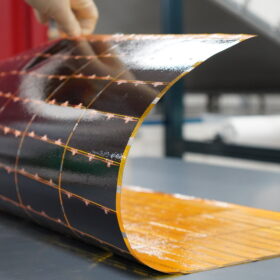
Solestial to provide Endurosat with space solar modules
The U.S.-based manufacturer announced it will provide solar power modules to satellite manufacturer Endurosat starting this year.

Market eyes Indian buying surge ahead of anti-dumping duty on Chinese solar cells
In a new weekly update for pv magazine, OPIS, a Dow Jones company, provides a quick look at the main price trends in the global PV industry.
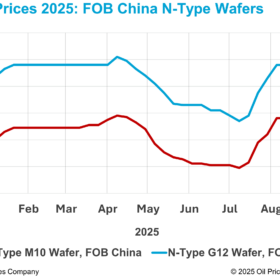
China wafer prices end four-week rally amid stable polysilicon, cooling demand
In a new weekly update for pv magazine, OPIS, a Dow Jones company, provides a quick look at the main price trends in the global PV industry.
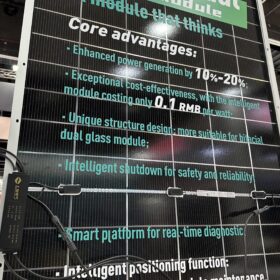
Solar module prices to rise 9% in Q4, says Wood Mackenzie
Wood Mackenzie says module prices will climb as China ends export rebates and consolidates polysilicon production.

Chinese PV Industry Brief: New PV additions for August total only 7.3 GW
China installed 7.36 GW of new solar in August, bringing year-to-date capacity additions to 230.61 GW and total power generation capacity to 3.69 TW.
