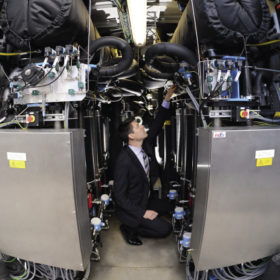
A banner year for advancing non-battery storage
This has been a breakthrough year for non-battery storage, with key advances in pumped hydro, power-to-gas, and thermal storage technologies. Many industry players are moving beyond pilot projects to contracted projects, which could lead to increased scale and lower costs.
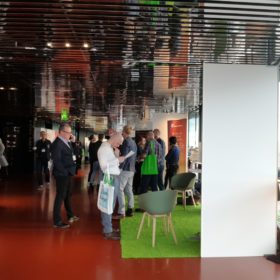
Swedish Solar Expo touts solar and hydrogen community project
Where seasonal storage is paramount, hydrogen comes into play. Under-the-radar solar market Sweden has presented its hydrogen projects and technological solutions to overcome the country’s natural solar barriers.
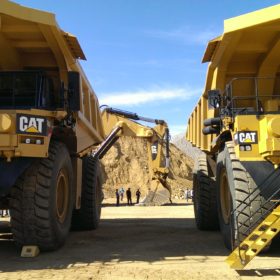
Hydrogen powered mining trucks are coming
The building-sized trucks run on diesel and prompt logistical complications as large amounts of diesel must be shipped to remote mining sites. Attempts to decarbonize the mining sector will have to consider the heavy-duty vehicles.
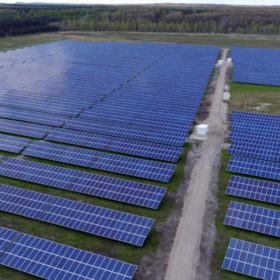
Germany will need 160 GW of solar by 2030 to prevent power shortages
EuPD Research has calculated what needs to be done to replace the nuclear and coal generation to be phased out in Germany. Accelerated expansion of PV appears the best short-term option. However, storage capacity will need to increase 30-fold by 2040 so solar can become the main pillar of the country’s energy system.

Why the EU needs binding targets for renewables and decarbonised gas for a climate-neutral Europe
Interview: The Energy Charts, developed by the Fraunhofer Institute for Solar Energy Systems (ISE) shows that the switch from coal to gas in Germany reduced CO2 emissions by one third in June. In a European wide transition, Eurogas General Secretary James Watson considers reductions of up to 45% possible by 2030. The gas sector is also willing to make the transition to renewables and decarbonised gases by the middle of the century. In the case of power-to-gas technologies, medium-term cost reductions which are comparable to the experience curve of photovoltaics is possible, Watson explained.
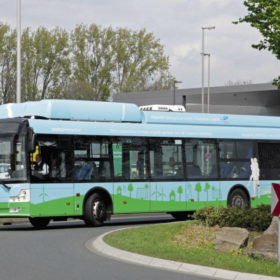
Spain’s Balearic Islands to host 10 MW hydrogen project
The green hydrogen production plant planned for the Lloseta industrial area will be a pioneer project for Spain and Europe, say regional government officials, and is scheduled to start operating from 2021.
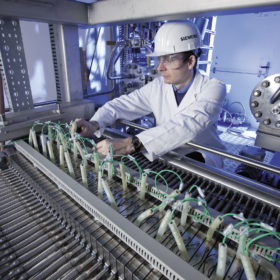
The what and when of P2G
Often touted as the missing link in the energy transition, power-to-gas (P2G) has not yet had its time to shine. While the technology has been around for decades, large-scale projects have been exceptionally rare. Over the last year, however, encouraging signals are emerging as research, pilot projects, and small-scale applications appear to have picked up pace. As debate continues about the tipping point for P2G in terms of conversion efficiency and costs, some market players are optimistic about near-term prospects.

Getting (almost) all our energy from the sun by 2050
Solar could meet approximately 68% of global energy demand with other renewables making up the rest, according to a new report. A 100% renewable energy system could also create 22 million solar jobs by 2050, the study claims. Keeping global warming below 1.5 degrees C, though, would require FITs for projects up to 40 MW in capacity, auctions for bigger systems, removing fossil fuel and nuclear subsidies and providing more education and R&D and less red tape.

Renewables & geopolitics: Russia
In the latest of our interviews about renewable energy and geopolitics, Indra Øverland – head of the Center for Energy Research – discusses the difficult relationship between Russia and renewable energy. Despite a belief the gas and oil superpower will have little interest in clean energy, Overland believes the world’s most extensive nation will use renewables to improve its domestic power supply, especially in remote regions. Russia has a highly continental climate, with lots of sunshine – more than most of Western Europe, Overland says. Whether it can take advantage of that potential, however, is unclear.
Vattenfall-led consortium plans 50 MW power-to-gas project in Germany
The energy company plans to build the “HySynGas” project in the Brunsbüttel Industrial Park with ARGE Netz and MAN Energy Solutions. The consortium wants to establish a power-to-gas hub for cross-sector decarbonization in northern Germany.
