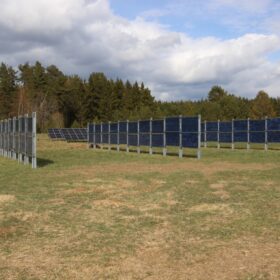
New methodology to identify suitable land for agrivoltaics
Researchers in Sweden have outlined a new methodology to identify suitable surfaces for agrivoltaic projects in their home country. They found that approximately 8.6% – roughly 38,485 km2 – of its land has the potential to host agrivoltaic facilities.
Deep-learning tech for dust detection in solar panels
Researchers from China and the UK have improved the Adam optimization algorithm to achieve better results in dust detection on PV panels. The optimized algorithm reportedly performed better than most common algorithms used for dust detection.

Addressing socio-economic challenges will advance solar
In its latest monthly column for pv magazine, the European Technology and Innovation Platform for Photovoltaics (ETIP PV) presents the main findings of a recent whitepaper it published on the nexus of the socio-economic and technological challenges of solar deployment.

Croatia deployed 238.7 MW of solar in 2023
The Renewable Energy Sources of Croatia says the country’s total installed solar capacity now stands at 462.5 MW. It says the country will come close to entering the “gigawatt club” by the start of 2025.

Merida Aerospace developing perovskite PV cells for space
Merida Aerospace, a US aerospace company, is developing perovskite solar cells for low-Earth-orbit satellites. It says perovskite solar cells could be a more cost-effective and efficient option than traditional cells.

Offshore floating PV system based on dual-axis tracker, tension leg platform
Developed by scientists in Spain, the HelioSea system is reportedly able to ensure structural reliability in challenging marine environments. The research group proposed to use tension leg platforms that have been successfully applied to offshore drilling platforms, where stability is also paramount.
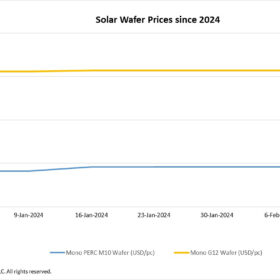
Solar wafer prices momentarily stable, masking turbulence of industry consolidation
In a new weekly update for pv magazine, OPIS, a Dow Jones company, provides a quick look at the main price trends in the global PV industry.
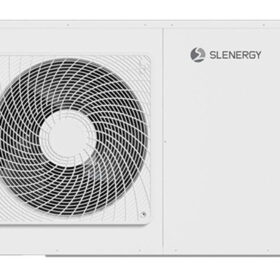
Slenergy releases residential PV system package with heat pump
Slenergy has introduced a new residential PV system package featuring 425 W solar panels, a hybrid inverter, a high-voltage battery, and a Slenergy-branded heat pump. The package incorporates Internet-of-Things hardware for real-time data collection and intelligent control strategies.
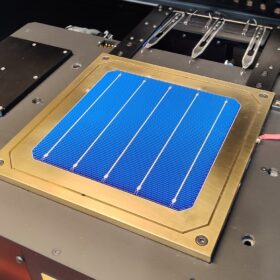
Netherlands reveals details of incentive scheme for PV manufacturing
The Dutch government has submitted a public proposal to support the production of heterojunction and perovskite-silicon tandem modules, as well as building- and vehicle-integrated PV panels, with a maximum allocation of €70 million ($75.1 million) per solar manufacturing project.
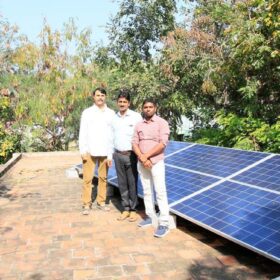
UK-led project explores PV module production in Africa, Asia, Indo-Pacific
Universities and businesses from the United Kingdom, Africa, Asia, and the Indo-Pacific are assessing the potential to set up sustainable PV module manufacturing hubs across the Global South.
